 ChipApex | Global Electronic Components Supplier
SEARCH
Search Product
Search Post
— IC芯片 | 连接器 | 传感器 | 被动器件 —
Search productSearch post
— IC芯片 | 连接器 | 传感器 | 被动器件 —
Consult the customer manager about the wholesale price.
consultation hotline:86-132-6715-2157
email:[email protected]
Contact the product manager for consultation. One-stop consultation is available.
Do you want a lower wholesale price? Please send us your inquiry and we will reply immediately.
The 3N245 is a high-reliability optically coupled isolator manufactured by TT Electronics/Optek Technology. It consists of an infrared emitting diode and an NPN silicon phototransistor mounted in a hermetically sealed TO-72 package with 0.50-inch leads. The device operates at an 880 nm wavelength and provides 1 kVDC electrical isolation. Key electrical parameters include a minimum current transfer ratio of 60% at a forward current of 3 mA, a forward voltage of 1.3 V, a maximum collector-emitter voltage of 30 V, and a maximum collector current of 30 mA. The saturation voltage is 300 mV, with rise and fall times of 10 µs.
Verify the specific revision status and manufacturing lot traceability when sourcing this component, as it is processed to military reliability standards. Confirm that the TO-72 package dimensions and lead spacing match your design requirements. Ensure the supplier provides documentation confirming compliance with the relevant military specifications for high-reliability applications.
Select the 3N245 when hermetic sealing and high reliability are required for optical isolation. The TO-72 package offers superior environmental protection compared to plastic packages. Consider the 880 nm wavelength compatibility with your optical system. Verify that the 1 kVDC isolation rating meets your safety requirements. Evaluate the current transfer ratio against your logic level needs.
The 3N245 belongs to the family of high-reliability optically coupled isolators from TT Electronics/Optek Technology. Similar devices in this series include the 3N243, 3N244, and 3N262, which share the same 880 nm wavelength and package style but may have different electrical characteristics. Other variants like the 3C91C and 3C92C operate at a 935 nm wavelength. These components are designed for demanding environments where standard plastic-packaged isolators may fail.
Direct replacements within the same family include the 3N243, 3N244, and 3N262, provided their specific electrical parameters meet your circuit requirements. Verify pinout compatibility and isolation voltage ratings before substitution.
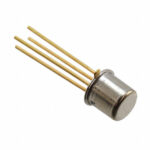 3N245
3N245
The activity of extra discounts on wholesale prices is in full swing…
Please fill in your contact information and we will send you the latest wholesale price list.





