 ChipApex | Global Electronic Components Supplier
SEARCH
Search Product
Search Post
— IC芯片 | 连接器 | 传感器 | 被动器件 —
Search productSearch post
— IC芯片 | 连接器 | 传感器 | 被动器件 —
Consult the customer manager about the wholesale price.
consultation hotline:86-132-6715-2157
email:[email protected]
Contact the product manager for consultation. One-stop consultation is available.
Do you want a lower wholesale price? Please send us your inquiry and we will reply immediately.
The 3N263 is a single-channel transistor output optocoupler manufactured by TT Electronics/Optek Technology. It features an NPN phototransistor output and utilizes a TO-72-4 through-hole package. The device provides an insulation voltage of 1000 Vrms. Electrical specifications include a collector-emitter saturation voltage of 300 mV, a maximum collector current of 30 mA, and a maximum collector-emitter voltage of 30 V. The forward voltage is 1.5 V at a forward current of 40 mA. Current transfer ratio ranges from 2% to 10%. Rise and fall times are both 25 us. Power dissipation is 200 mW. Operating temperature spans from -55 C to +125 C.
Verify component authenticity and physical condition upon receipt. Confirm the manufacturer marking matches Optek or TT Electronics standards. Inspect leads for corrosion or damage. Check datasheet revisions for updated electrical limits. Note that this specific part number may be discontinued; verify availability status with authorized distributors before finalizing procurement plans.
Select this component when high isolation voltage is required in a small through-hole package. Ensure the circuit design accommodates the specified current transfer ratio range. Verify that the operating temperature range meets environmental requirements. Consider the rise and fall times for signal integrity in switching applications. Confirm compatibility with available drive currents for the LED input side.
This component belongs to the family of transistor output optocouplers produced by TT Electronics. These devices are designed for general-purpose isolation tasks. The TO-72 package offers a standard footprint for legacy and modern PCB designs. The product line emphasizes reliability in harsh environments.
Public confirmed substitute part numbers are not available in the provided documentation. Verify pinout compatibility and electrical parameters if considering alternative manufacturers. Consult official replacement guides from the manufacturer for obsolete part transitions.
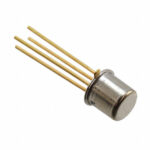 3N263
3N263
The activity of extra discounts on wholesale prices is in full swing…
Please fill in your contact information and we will send you the latest wholesale price list.






