 ChipApex | Global Electronic Components Supplier
SEARCH
Search Product
Search Post
— IC芯片 | 连接器 | 传感器 | 被动器件 —
Search productSearch post
— IC芯片 | 连接器 | 传感器 | 被动器件 —
Consult the customer manager about the wholesale price.
consultation hotline:86-132-6715-2157
email:[email protected]
Contact the product manager for consultation. One-stop consultation is available.
Do you want a lower wholesale price? Please send us your inquiry and we will reply immediately.
The 416F50013ISR is a fundamental mode quartz crystal resonator manufactured by CTS-Frequency Controls. It operates at a nominal frequency of 50 MHz with a frequency tolerance of ±10 ppm and a frequency stability of ±30 ppm. The component features an equivalent series resistance (ESR) of 60 Ohms and utilizes a standard 4-SMD, no-lead package measuring 1.60mm x 1.20mm x 0.45mm maximum height. Designed for surface mount applications, it supports a wide operating temperature range from -40°C to +85°C. The device complies with RoHS3 standards and carries an MSL rating of 1.
Verify the specific suffix 'ISR' against official CTS documentation to confirm tape-and-reel packaging specifications. Confirm that the 60 Ohm ESR matches the target oscillator circuit requirements. Ensure the 4-SMD footprint dimensions align with the PCB layout constraints. Check current availability status as supply chain conditions may affect lead times. Validate compliance with RoHS3 regulations if required by the end-product specifications.
Select this component when a 50 MHz fundamental crystal with ±10 ppm initial tolerance is required. The 60 Ohm ESR must be compatible with the host oscillator's drive level and load capacitance settings. The -40°C to +85°C temperature range suits industrial or commercial environments. Consider the 1.6x1.2mm package size for space-constrained surface mount layouts. Verify that the application does not require higher stability grades than the ±30 ppm specification allows.
This part belongs to the CTS 416 Series, a line of low-cost surface mount crystals designed for commercial applications. The series typically covers frequencies between 24 MHz and 80 MHz. The 416F50013ISR shares physical and electrical characteristics with other variants in the series, differing primarily in frequency and tolerance parameters. It represents a standard solution for general-purpose clocking needs in consumer electronics.
The 416F50013IST is documented as a parameter-equivalent alternative. Verify that the 'IST' suffix denotes identical electrical and mechanical specifications before substitution. Ensure that any replacement maintains the same 60 Ohm ESR and 50 MHz frequency tolerance. Confirm package compatibility and thermal performance match the original design requirements.
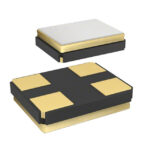 416F50013ISR
The activity of extra discounts on wholesale prices is in full swing…
Please fill in your contact information and we will send you the latest wholesale price list.




