 ChipApex | Global Electronic Components Supplier
SEARCH
Search Product
Search Post
— IC芯片 | 连接器 | 传感器 | 被动器件 —
Search productSearch post
— IC芯片 | 连接器 | 传感器 | 被动器件 —
Consult the customer manager about the wholesale price.
consultation hotline:86-132-6715-2157
email:[email protected]
Contact the product manager for consultation. One-stop consultation is available.
Do you want a lower wholesale price? Please send us your inquiry and we will reply immediately.
The CTS-Frequency Controls 416F5001XCAR is a surface-mount crystal oscillator designed for precise frequency generation. It operates at a nominal frequency of 50 MHz with a stability tolerance of ±15 ppm. The component features a load capacitance of 10 pF and an equivalent series resistance (ESR) of 60 Ohms. It utilizes a fundamental crystal design housed in a compact 4-SMD, No Lead package measuring 1.6 mm x 1.2 mm. The device supports an operating temperature range from -20°C to +70°C, ensuring reliable performance in standard commercial environments.
Verify the specific suffix designation against official CTS documentation to confirm exact stability and load capacitance parameters. Ensure the selected variant matches the required thermal operating range for the target application environment. Cross-reference manufacturer datasheets for precise mechanical dimensions and soldering recommendations to guarantee proper assembly and long-term reliability.
Select this component when a 50 MHz reference with ±15 ppm stability is required. Consider the 10 pF load capacitance compatibility with the host oscillator circuit. Evaluate the -20°C to +70°C temperature range against environmental conditions. Compare ESR values with other available packages to ensure impedance matching within the design constraints.
This part belongs to the CTS 416F series of surface-mount crystals. The series offers various frequency options and stability grades. The 416F5001XCAR specifically targets the 50 MHz segment with moderate stability requirements. It complements higher-stability variants like the XCLR model while providing a cost-effective solution for standard commercial applications requiring reliable timing signals.
Direct substitutes include the 416F5001XCLR, which offers improved ±10 ppm stability but requires 12 pF load capacitance. Verify that the host circuit can accommodate the capacitance difference. Other family members may share the same footprint but differ in frequency or temperature range. Always validate electrical parameters before substitution.
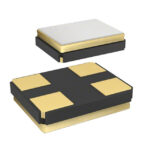 416F5001XCAR
The activity of extra discounts on wholesale prices is in full swing…
Please fill in your contact information and we will send you the latest wholesale price list.




