ChipApex | Global Electronic Components Supplier
SEARCH
Search Product
Search Post
— IC芯片 | 连接器 | 传感器 | 被动器件 —
Search productSearch post
— IC芯片 | 连接器 | 传感器 | 被动器件 —
Consult the customer manager about the wholesale price.
consultation hotline:86-132-6715-2157
email:[email protected]
Contact the product manager for consultation. One-stop consultation is available.
Do you want a lower wholesale price? Please send us your inquiry and we will reply immediately.
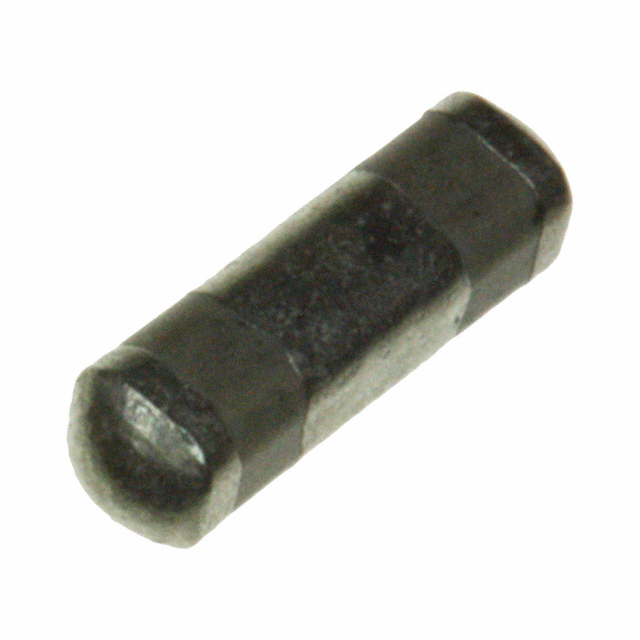
The 4700-006MLF is a surface-mount EMI feedthrough capacitor manufactured by Tusonix, a subsidiary of CTS Electronic Components. This component belongs to the 4700 series and features a three-terminal LC (Pi) network filter configuration. It provides a capacitance of 100 pF with a DC voltage rating of 100 VDC. The device supports a current rating of 10 A and operates within a temperature range of -55°C to +125°C. Its physical dimensions are 8 mm in length, 2.29 mm in width, and 2.29 mm in height. The unit utilizes a square pill package style suitable for automated surface-mount assembly.
Verify RoHS3 compliance status as indicated by the MLF suffix. Confirm the specific tolerance class required for the application, as datasheets may list variations. Ensure the selected packaging format matches the production line capabilities. Cross-reference the manufacturer part number with distributor codes to avoid ordering errors. Validate thermal performance requirements against the specified operating temperature range.
Select this component when a low-capacitance, high-current surface-mount filter is required. The 100 pF value suits high-speed signal lines needing minimal loading. The 10 A rating allows use in power distribution paths with moderate current loads. Consider the three-terminal grounding advantage for superior RF performance compared to standard two-terminal capacitors. Evaluate the small footprint against available PCB real estate constraints.
This part is part of the Tusonix 4700 series of feedthrough capacitors. The series offers various capacitance values and configurations for EMI suppression. The MLF suffix typically denotes lead-free and halogen-free construction compliant with environmental directives. These components are designed to replace traditional through-hole filters in modern surface-mount assemblies.
Check for direct substitutes within the same series offering identical electrical parameters. Verify that alternative packages maintain the same mounting footprint and terminal configuration. Ensure any replacement meets the same current and voltage ratings. Confirm compatibility with existing soldering profiles and manufacturing processes.
 4700-006MLF
The activity of extra discounts on wholesale prices is in full swing…
Please fill in your contact information and we will send you the latest wholesale price list.