 ChipApex | Global Electronic Components Supplier
SEARCH
Search Product
Search Post
— IC芯片 | 连接器 | 传感器 | 被动器件 —
Search productSearch post
— IC芯片 | 连接器 | 传感器 | 被动器件 —
Consult the customer manager about the wholesale price.
consultation hotline:86-132-6715-2157
email:[email protected]
Contact the product manager for consultation. One-stop consultation is available.
Do you want a lower wholesale price? Please send us your inquiry and we will reply immediately.
The Broadcom Limited 4N25-360E is a single-channel transistor output optocoupler housed in a PDIP-6 Gull Wing package. It features an NPN phototransistor output with a maximum collector current of 100 mA and a collector-emitter voltage rating of 30 V. The device provides 2500 Vrms insulation voltage and supports a forward current of up to 80 mA. Key electrical parameters include a minimum current transfer ratio of 20%, a forward voltage of 1.5 V, and a maximum collector-emitter saturation voltage of 500 mV. Switching characteristics specify rise and fall times of 3 µs each.
Verify the specific ordering suffix matches the required RoHS compliance status and packaging configuration. Confirm that the lead time aligns with project schedules as availability may vary by region. Ensure the procurement channel is authorized to guarantee component authenticity and traceability. Cross-reference the manufacturer part number with official datasheets to validate technical specifications before finalizing orders.
Select this component when moderate speed switching is sufficient for the application, given its 3 µs rise and fall times. Consider the 100 mA collector current limit for load driving requirements. Evaluate the 2500 Vrms isolation rating against system safety standards. Compare against higher-speed alternatives if data rates exceed the capabilities of standard transistor output devices.
This device belongs to the standard family of transistor output optocouplers manufactured by Broadcom Limited. It serves as a foundational component for basic isolation tasks in electronic circuits. The product line is widely recognized for compatibility with general-purpose digital logic interfaces and power control applications requiring electrical separation between input and output stages.
Direct substitutes include other single-channel NPN phototransistor optocouplers with identical pinouts and similar electrical ratings. Verify that replacement parts meet the same 2500 Vrms isolation and 100 mA current requirements. Check for equivalent switching speeds and current transfer ratios to ensure circuit performance remains unchanged.
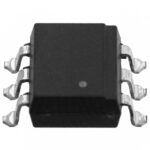 4N25-360E
The activity of extra discounts on wholesale prices is in full swing…
Please fill in your contact information and we will send you the latest wholesale price list.





