 ChipApex | Global Electronic Components Supplier
SEARCH
Search Product
Search Post
— IC芯片 | 连接器 | 传感器 | 被动器件 —
Search productSearch post
— IC芯片 | 连接器 | 传感器 | 被动器件 —
Consult the customer manager about the wholesale price.
consultation hotline:86-132-6715-2157
email:[email protected]
Contact the product manager for consultation. One-stop consultation is available.
Do you want a lower wholesale price? Please send us your inquiry and we will reply immediately.
The Lite-On Inc. 4N26M is a single-channel transistor output optocoupler housed in a compact 6-pin dual-in-line package (DIP). It provides high isolation voltage between input and output, with specifications indicating up to 5000 V rms for certain variants or 1500 Vrms for others depending on the specific datasheet version. The device features a phototransistor output with a base connection, offering a typical response time of 3 µs under standard test conditions. It operates within a temperature range of -55 °C to +110 °C and is compliant with RoHS standards. Key electrical parameters include a minimum collector-emitter breakdown voltage of 80 V and a nominal current transfer ratio of 20%.
Verify the specific manufacturer variant when sourcing, as the 4N26M part number is used by multiple manufacturers including Everlight and Lite-On. Confirm the exact isolation voltage rating (1500 Vrms vs 5000 Vrms) required for your application against the official datasheet. Ensure the package type matches the PCB footprint requirements. Check for RoHS compliance status if environmental regulations apply to the final product assembly.
Select this component when galvanic isolation is required between low-voltage control circuits and higher-voltage loads. The available base pin allows for faster turn-off times compared to base-less configurations. Consider the operating temperature range and current transfer ratio requirements for signal integrity. Ensure the forward current limits are respected to maintain longevity and consistent performance across the specified thermal range.
The 4N26M belongs to the broader family of transistor output optocouplers, often grouped with similar models like the 4N25, 4N27, and 4N28. These devices share common architectural features such as the infrared LED emitter and NPN phototransistor detector. The series is widely recognized for general-purpose isolation tasks in industrial and consumer electronics, providing a cost-effective solution for signal transmission across isolated boundaries.
Direct substitutes include the LTV-4N26M from Lite-On Technology Corporation. Other compatible alternatives within the same functional family may include the 4N25, 4N27, and 4N28, provided their specific electrical ratings meet the design requirements. Always verify pinout compatibility and isolation voltage specifications before substitution.
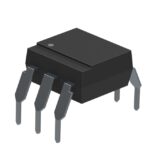 4N26M
4N26M
The activity of extra discounts on wholesale prices is in full swing…
Please fill in your contact information and we will send you the latest wholesale price list.






