 ChipApex | Global Electronic Components Supplier
SEARCH
Search Product
Search Post
— IC芯片 | 连接器 | 传感器 | 被动器件 —
Search productSearch post
— IC芯片 | 连接器 | 传感器 | 被动器件 —
Consult the customer manager about the wholesale price.
consultation hotline:86-132-6715-2157
email:[email protected]
Contact the product manager for consultation. One-stop consultation is available.
Do you want a lower wholesale price? Please send us your inquiry and we will reply immediately.
The Fairchild Semiconductor 4N26SM is a general-purpose, single-channel transistor output optocoupler housed in a surface-mount DIP-6 package. It provides electrical isolation between input and output circuits using an infrared LED coupled to an NPN phototransistor. Key electrical specifications include a maximum forward current of 60 mA, a collector-emitter breakdown voltage of 30 V, and a minimum current transfer ratio of 20%. The device offers a high isolation voltage rating of 4170 Vrms (or 4200 V min) and operates within a temperature range of -40°C to +100°C.
Verify the manufacturer marking on the component body, as both Fairchild Semiconductor and onsemi produce this part number following corporate acquisitions. Confirm the suffix 'SM' indicates the specific surface-mount DIP-6 package variant rather than through-hole versions. Ensure the datasheet version matches the required isolation voltage ratings and safety certifications for your specific application compliance needs.
Select this component when a cost-effective, general-purpose optocoupler with moderate speed and high isolation voltage is required. It is suitable for applications where the 2 µs switching time is sufficient. Consider alternative packages if surface-mount constraints are not met, or choose devices with higher current transfer ratios if driving heavy loads directly from the phototransistor collector.
The 4N26 series is a widely recognized family of general-purpose optocouplers originally introduced by Fairchild Semiconductor. The 4N26SM specifically denotes the surface-mount variant of the classic 4N26 through-hole device. This component remains a standard reference design in many electronic schematics for basic isolation tasks due to its long-standing availability and predictable performance characteristics across various operating conditions.
Direct pin-compatible replacements include the 4N25SM and 4N27SM, though their current transfer ratios differ. Verify that substitute parts meet the same 4170 Vrms isolation requirement and operate within the -40°C to +100°C temperature range. Always consult the specific datasheet of the replacement component to ensure compatibility with existing circuit biasing conditions.
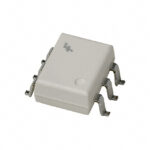 4N26SM
The activity of extra discounts on wholesale prices is in full swing…
Please fill in your contact information and we will send you the latest wholesale price list.






