 ChipApex | Global Electronic Components Supplier

SEARCH
Search Product
Search Post
Search productSearch post
Consult the customer manager about the wholesale price.
consultation hotline:86-132-6715-2157
email:[email protected]
Contact the product manager for consultation. One-stop consultation is available.
Do you want a lower wholesale price? Please send us your inquiry and we will reply immediately.
4N26TM is listed in the Transistor, Photovoltaic Output Optoisolators range at ChipApex. The manufacturer field lists onsemi. Its product description is OPTOISO 7.5KV TRANS W/BASE 6-DIP. Review the specifications below when checking this part for your BOM.
The 4N26TM is a high-speed optocoupler manufactured by onsemi, featuring an infrared-emitting GaAs LED coupled to a silicon NPN phototransistor with a built-in base terminal. This component provides electrical isolation of 7500 Vrms between input and output circuits. It is housed in a standard 6-pin DIP package, designed for robust signal transmission in environments requiring galvanic isolation.
Verify the specific suffix 'TM' against the official datasheet to confirm pinout and packaging dimensions match your PCB layout requirements. Ensure the component meets the required isolation voltage standards for your specific safety certification needs before finalizing procurement.
Select this component when a dedicated base terminal is needed to optimize switching times or reduce sensitivity to noise. Consider the 6-DIP package constraints and verify that the current transfer ratio meets the drive requirements of the downstream circuitry.
This device belongs to the family of general-purpose optocouplers used for isolating low-voltage digital signals from higher-voltage analog or power circuits. The inclusion of a base connection distinguishes it from simpler two-terminal optoisolators, offering greater design flexibility for timing adjustments.
Check for direct pin-compatible alternatives such as the 4N25 or 4N27 series if availability is constrained, ensuring that the collector-emitter voltage and isolation ratings remain compatible with the original design specifications.
Explore related parts through Optocouplers, Optoisolators, Isolators, all product categories, ChipApex homepage.
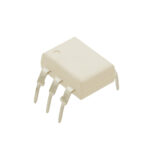 4N26TM

The activity of extra discounts on wholesale prices is in full swing…
Please fill in your contact information and we will send you the latest wholesale price list.






