 ChipApex | Global Electronic Components Supplier
SEARCH
Search Product
Search Post
— IC芯片 | 连接器 | 传感器 | 被动器件 —
Search productSearch post
— IC芯片 | 连接器 | 传感器 | 被动器件 —
Consult the customer manager about the wholesale price.
consultation hotline:86-132-6715-2157
email:[email protected]
Contact the product manager for consultation. One-stop consultation is available.
Do you want a lower wholesale price? Please send us your inquiry and we will reply immediately.
The Broadcom Limited 4N35-560E is a single-channel transistor output optocoupler housed in a PDIP-6 Gull Wing surface-mount package. It features an NPN phototransistor output with a maximum collector current of 100 mA and a collector-emitter voltage rating of 30 V. The device provides an isolation voltage of 3550 Vrms and supports a forward current of 60 mA. Electrical characteristics include a forward voltage of 1.5 V, a collector-emitter saturation voltage of 300 mV, and rise/fall times of 10 µs. It operates within a temperature range of -55°C to +100°C.
Verify the specific suffix '560E' against the official Broadcom datasheet to confirm the reel packaging format and RoHS compliance status. Ensure the ordering part number matches the required tape-and-reel quantity specifications. Cross-reference the manufacturer date code and lot traceability requirements with your quality assurance standards before finalizing procurement orders.
Select this component when a standard NPN phototransistor output is required for general-purpose isolation. Consider the 10 µs switching speed and 3550 Vrms isolation rating for applications where moderate speed and high voltage separation are necessary. Evaluate the PDIP-6 footprint compatibility during PCB layout design to ensure proper soldering and thermal management.
This device belongs to the 4N35 series of optocouplers manufactured by Broadcom Limited. It serves as a surface-mount variant of the traditional through-hole 4N35, maintaining similar electrical performance while adapting to modern SMD assembly processes. The product line is widely recognized for basic digital signal isolation tasks across various electronic industries.
Check for direct pin-compatible alternatives such as the HCPL-2631 or other 4N35-series variants from different manufacturers. Verify that any substitute maintains the same NPN output type, isolation voltage rating, and physical package dimensions to ensure seamless integration without redesigning the host circuit board.
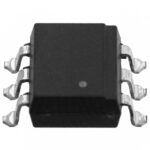 4N35-560E
The activity of extra discounts on wholesale prices is in full swing…
Please fill in your contact information and we will send you the latest wholesale price list.





