 ChipApex | Global Electronic Components Supplier
SEARCH
Search Product
Search Post
— IC芯片 | 连接器 | 传感器 | 被动器件 —
Search productSearch post
— IC芯片 | 连接器 | 传感器 | 被动器件 —
Consult the customer manager about the wholesale price.
consultation hotline:86-132-6715-2157
email:[email protected]
Contact the product manager for consultation. One-stop consultation is available.
Do you want a lower wholesale price? Please send us your inquiry and we will reply immediately.
The Si501FAK-ACAG is a high-performance, low-jitter clock generator from Silicon Labs' Si501 family. It features an integrated voltage-controlled crystal oscillator (VCXO) and a programmable output stage. The device supports multiple output frequencies with precise jitter attenuation capabilities. Key electrical parameters include a supply voltage range of 3.0V to 3.6V and an operating temperature range of -40°C to +85°C. Output formats are configurable for LVCMOS or LVDS standards depending on the specific pin configuration. The component utilizes I2C interface for register programming and frequency control.
Verify the exact suffix codes against the manufacturer's latest datasheet to ensure compatibility with your specific voltage and temperature requirements. Confirm that the package type matches your PCB footprint design. Check for any recent revisions in the part number that might indicate updated specifications or packaging changes. Ensure that the I2C address settings align with your system's bus architecture before finalizing procurement.
Select this component when low jitter and phase noise are critical constraints for your signal integrity. Consider the available output formats and whether LVCMOS or LVDS best suits your downstream logic levels. Evaluate the power consumption requirements against the device's typical operating current. Ensure that the input clock source or internal VCXO mode meets your frequency stability needs across the specified temperature range.
This part belongs to Silicon Labs' Si501 series of clock generators, designed for applications requiring superior timing accuracy. The series offers various configurations to support different industry standards. The ACAG suffix typically denotes specific package, temperature, and tape-and-reel packaging details. It is positioned as a solution for high-speed data transmission where clock quality directly impacts system performance.
Consult official cross-reference guides for direct replacements. Verify that substitute parts offer equivalent jitter performance and compatible pinouts. Ensure that alternative components support the same I2C programming protocol if software reuse is required. Check for availability of similar packages to minimize PCB redesign efforts.
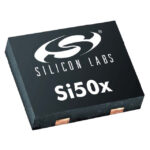 501FAK-ACAG
The activity of extra discounts on wholesale prices is in full swing…
Please fill in your contact information and we will send you the latest wholesale price list.




