ChipApex | Global Electronic Components Supplier
SEARCH
Search Product
Search Post
— IC芯片 | 连接器 | 传感器 | 被动器件 —
Search productSearch post
— IC芯片 | 连接器 | 传感器 | 被动器件 —
Consult the customer manager about the wholesale price.
consultation hotline:86-132-6715-2157
email:[email protected]
Contact the product manager for consultation. One-stop consultation is available.
Do you want a lower wholesale price? Please send us your inquiry and we will reply immediately.
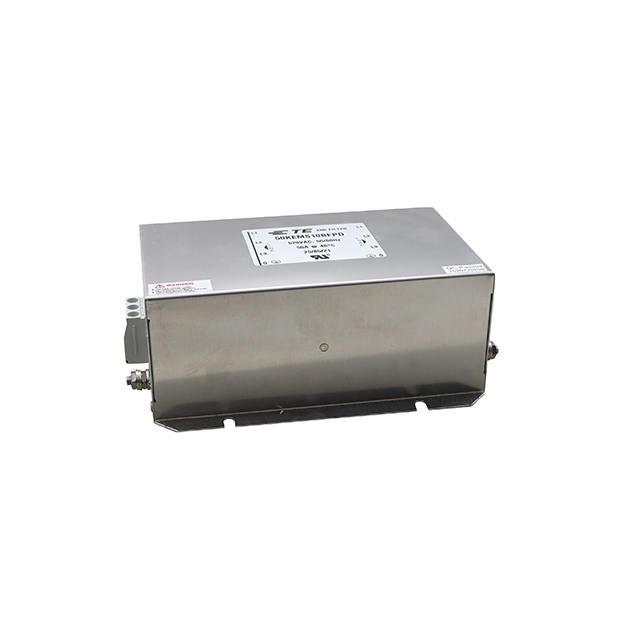
The 50KEMS10BFPD is a three-phase power line filter manufactured by TE Connectivity Corcom Filters. It features a chassis mount configuration with terminal block termination. The component is rated for a continuous current of 50 A and operates at voltage ratings of 440 VAC or 520 VAC depending on the specific variant designation. It supports operating frequencies of 50 Hz and 60 Hz. The unit includes high-performance single-pole delta filtering capabilities and exhibits a leakage current of 18 mA. Compliance certifications include UL and CSA standards.
Verify the exact voltage rating required for your application, as datasheets indicate variations between 440 VAC and 520 VAC for similar part numbers within this series. Confirm that the terminal block termination style matches your wiring infrastructure. Ensure the chassis mounting dimensions align with your enclosure specifications before finalizing procurement decisions.
Select this component when three-phase EMI suppression is necessary for loads up to 50 Amperes. Consider the specific voltage rating (440 VAC vs 520 VAC) based on your system's nominal voltage. Verify that the chassis mount form factor fits your available panel space. Ensure compatibility with terminal block wiring methods rather than solder or quick-connect styles.
This filter belongs to the KEM series from TE Connectivity Corcom Filters, which specializes in power line filters for demanding industrial environments. The series is designed to handle significant current loads while maintaining strict electromagnetic compatibility standards. These components are integral to protecting sensitive electronics from line-borne disturbances in heavy-duty applications.
Publicly confirmed substitute part numbers for this specific model were not identified in the provided documentation. Cross-referencing with the 50KEMS10AFPDHM or 50KEMS10BFPDHM variants may be necessary, but verification of voltage ratings and certification requirements is essential due to potential differences in specifications.
 50KEMS10BFPD
The activity of extra discounts on wholesale prices is in full swing…
Please fill in your contact information and we will send you the latest wholesale price list.