 ChipApex | Global Electronic Components Supplier
SEARCH
Search Product
Search Post
— IC芯片 | 连接器 | 传感器 | 被动器件 —
Search productSearch post
— IC芯片 | 连接器 | 传感器 | 被动器件 —
Consult the customer manager about the wholesale price.
consultation hotline:86-132-6715-2157
email:[email protected]
Contact the product manager for consultation. One-stop consultation is available.
Do you want a lower wholesale price? Please send us your inquiry and we will reply immediately.
The Skyworks Solutions Inc. 510AAA-BBAG is a programmable crystal oscillator (XO) from the Si510 series, designed for general-purpose clocking applications. It operates at a supply voltage of 3.3V and features an LVPECL output format. The device supports frequencies ranging from 0.1 MHz to 250 MHz and utilizes a 6-SMD, no-lead package with dimensions of 5.00mm x 3.20mm. It includes an enable/disable function and offers frequency stability suitable for standard timing requirements.
Verify the specific target frequency and load capacitance requirements against the datasheet before ordering, as this is a programmable device. Confirm that the LVPECL output format aligns with the receiving circuit's input specifications. Ensure the 3.3V supply voltage matches the system design. Check for any specific programming tools or software required by Skyworks Solutions to configure the oscillator parameters prior to deployment.
Select this component when a flexible, programmable clock source is needed rather than a fixed-frequency crystal. The Si510 series provides a balance of performance and size. Consider the LVPECL output if low noise and high-speed signaling are priorities. Evaluate the 6-SMD package footprint against PCB space constraints. Compare against other Si510 variants like the 510BCA or 510AAA-CBAG if different output formats or package sizes are preferred.
The 510AAA-BBAG belongs to the Skyworks Si510 family of standard and programmable oscillators. This series is widely used in embedded systems and networking gear. It competes with other programmable XO offerings from manufacturers like SiTime. The part number suffix 'BBAG' typically denotes the package type and tape/reel configuration, distinguishing it from tray-packaged or differently packaged variants within the same functional family.
Direct substitutes include other Skyworks Si510 programmable oscillators such as 510AAA-CBAG, which may offer similar functionality but potentially different packaging or minor electrical variations. Cross-manufacturer replacements require careful verification of pin compatibility, output voltage levels, and programmability features to ensure seamless integration without redesign.
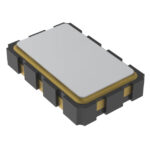 510AAA-BBAG
The activity of extra discounts on wholesale prices is in full swing…
Please fill in your contact information and we will send you the latest wholesale price list.





