 ChipApex | Global Electronic Components Supplier
SEARCH
Search Product
Search Post
— IC芯片 | 连接器 | 传感器 | 被动器件 —
Search productSearch post
— IC芯片 | 连接器 | 传感器 | 被动器件 —
Consult the customer manager about the wholesale price.
consultation hotline:86-132-6715-2157
email:[email protected]
Contact the product manager for consultation. One-stop consultation is available.
Do you want a lower wholesale price? Please send us your inquiry and we will reply immediately.
The Skyworks Solutions Inc. 510BAA-CAAG is a programmable crystal oscillator (XO) belonging to the Si510 series, designed for general-purpose clocking applications. It operates on a single supply voltage of 3.3V and features an LVDS output format suitable for high-speed digital interfaces. The device supports frequency programming with a stability of ±50ppm and includes an enable/disable function for power management. It is housed in a compact surface-mount package measuring 7.00mm by 5.00mm, with a maximum height of 1.65mm. The component is rated for operation within a temperature range of -40°C to +85°C, ensuring reliability in industrial environments.
Verify the specific programmed frequency and output configuration prior to ordering, as this is a programmable device. Confirm that the LVDS output format matches the receiving circuit's input requirements. Ensure the 3.3V supply voltage aligns with the system design specifications. Check the latest datasheet for any updates regarding pinout or electrical characteristics.
Select this component when a precise, low-jitter clock signal is required with differential output capabilities. The LVDS format is preferred for long trace lengths or noisy environments. Consider the ±50ppm stability requirement against the system's tolerance limits. The 7x5mm package size offers a balance between thermal performance and board space efficiency compared to smaller alternatives.
The 510BAA-CAAG is part of the Si510 family of standard oscillators from Skyworks Solutions. This series provides a range of fixed and programmable options with various output formats including CMOS and LVDS. The family is characterized by low phase jitter and wide operating temperature ranges, making it suitable for demanding electronic applications requiring stable timing references.
Direct substitutes may include other Skyworks Si510 series devices with matching LVDS outputs and similar package dimensions. Verify that alternative parts support the same 3.3V supply and enable/disable functionality. Cross-reference the frequency stability and operating temperature range to ensure compatibility with the existing design constraints.
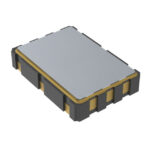 510BAA-CAAG
The activity of extra discounts on wholesale prices is in full swing…
Please fill in your contact information and we will send you the latest wholesale price list.





