 ChipApex | Global Electronic Components Supplier
SEARCH
Search Product
Search Post
— IC芯片 | 连接器 | 传感器 | 被动器件 —
Search productSearch post
— IC芯片 | 连接器 | 传感器 | 被动器件 —
Consult the customer manager about the wholesale price.
consultation hotline:86-132-6715-2157
email:[email protected]
Contact the product manager for consultation. One-stop consultation is available.
Do you want a lower wholesale price? Please send us your inquiry and we will reply immediately.
The Skyworks Solutions Inc. 510BCA-AAAG is a programmable crystal oscillator (XO) from the Si510 series, designed for high-performance clock generation. It features an LVDS output format and operates on a 3.3 V supply voltage with a maximum current draw of 19 mA. The device supports frequencies ranging from 0.1 MHz to 250 MHz and offers a frequency stability of 20 ppm. Encased in a compact 7 mm x 5 mm surface-mount package with six leads, it functions within a temperature range of -40°C to +85°C. Key electrical parameters include a load capacitance of 15 pF and a duty cycle of up to 52%.
Verify the specific frequency configuration required for your application, as this is a programmable device. Confirm that the LVDS output level matches the input requirements of the downstream component. Ensure the operating environment stays within the specified -40°C to +85°C temperature range. Check for any specific ordering suffixes if reel packaging is preferred over cut tape. Validate pinout compatibility during PCB layout to ensure correct signal routing.
Select this model when a stable, low-jitter clock source with LVDS outputs is needed for digital circuits. Consider the 20 ppm stability requirement against system timing budgets. Evaluate the 7x5 mm footprint against available board space constraints. Compare power consumption metrics with other oscillators if energy efficiency is critical. Ensure the programmable nature allows for future design flexibility without hardware changes.
This component belongs to the Si510 family of standard clock oscillators manufactured by Skyworks Solutions. The series is known for providing flexible clock solutions for various digital applications. The 510BCA-AAAG specifically utilizes a crystal resonator base and delivers differential outputs. It is part of a broader portfolio designed to meet the stringent timing requirements of modern electronic systems.
Direct substitutes may include other Skyworks Si510 series models with compatible LVDS outputs and similar footprints. Verify that alternative parts match the 3.3 V supply and 20 ppm stability specifications. Cross-reference pinouts and enable pin configurations to ensure seamless integration. Consult official replacement lists for parameter-equivalent components if availability is an issue.
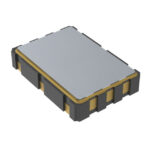 510BCA-AAAG
The activity of extra discounts on wholesale prices is in full swing…
Please fill in your contact information and we will send you the latest wholesale price list.





