 ChipApex | Global Electronic Components Supplier
SEARCH
Search Product
Search Post
— IC芯片 | 连接器 | 传感器 | 被动器件 —
Search productSearch post
— IC芯片 | 连接器 | 传感器 | 被动器件 —
Consult the customer manager about the wholesale price.
consultation hotline:86-132-6715-2157
email:[email protected]
Contact the product manager for consultation. One-stop consultation is available.
Do you want a lower wholesale price? Please send us your inquiry and we will reply immediately.
The Skyworks Solutions Inc. 510BCA-BAAG is a standard crystal oscillator (XO) from the Si510 series, designed for surface-mount applications. It operates at a supply voltage of 3.3V with a maximum current consumption of 23mA. The device features LVDS output format and supports an enable/disable function via pin control. It provides a frequency stability of ±20ppm and functions within a temperature range of -40°C to +85°C. The component is housed in a compact 6-SMD, no-lead package measuring 5.00mm x 3.20mm.
Verify the specific frequency parameter required for your application, as the base part number 510BCA-BAAG represents a configurable family member rather than a fixed-frequency unit. Confirm that the selected variant matches the target system's voltage and interface requirements. Ensure compatibility with the 6-SMD footprint during PCB layout. Check official documentation for the exact frequency code suffix to guarantee performance specifications.
Select this component when a low-jitter, LVDS-output clock source is needed in a small form factor. The Si510 series offers flexibility through various frequency options within the same package. Consider the ±20ppm stability for general timing needs. Evaluate the 3.3V operation against other system rails. The enable pin allows for power management strategies in battery-operated or standby-sensitive designs.
The 510BCA-BAAG belongs to the Skyworks Si510 family of standard oscillators. This series is characterized by its small 7x5mm or 5x3.2mm packages and wide frequency range. It competes with other industry-standard XO solutions but distinguishes itself through Skyworks' integration capabilities and reliability standards for industrial and commercial applications.
Direct substitutes include other Skyworks Si510 variants with matching LVDS outputs and package dimensions. Cross-brand replacements require verification of pinout compatibility, voltage levels, and jitter specifications. Always confirm that the replacement part meets the original design's frequency stability and temperature range requirements.
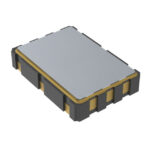 510BCA-BAAG
The activity of extra discounts on wholesale prices is in full swing…
Please fill in your contact information and we will send you the latest wholesale price list.





