 ChipApex | Global Electronic Components Supplier
SEARCH
Search Product
Search Post
— IC芯片 | 连接器 | 传感器 | 被动器件 —
Search productSearch post
— IC芯片 | 连接器 | 传感器 | 被动器件 —
Consult the customer manager about the wholesale price.
consultation hotline:86-132-6715-2157
email:[email protected]
Contact the product manager for consultation. One-stop consultation is available.
Do you want a lower wholesale price? Please send us your inquiry and we will reply immediately.
The Skyworks Solutions Inc. 510DAA-CBAG is a dual-band, low-noise amplifier (LNA) designed for wireless infrastructure applications. It operates in the 700 MHz to 2.7 GHz frequency range, supporting both LTE and 5G NR bands. The device integrates two LNAs with independent control pins for power-down functionality. Key electrical parameters include a typical noise figure of 1.8 dB at 900 MHz and 2.0 dB at 1.9 GHz. Gain is typically 16 dB across the operating band. The component features a single-ended input and output configuration with an internal bias circuit. It is housed in a compact 4 mm x 4 mm QFN package.
Verify the specific suffix code matches the required tape-and-reel packaging configuration. Confirm that the date code aligns with project timeline requirements. Ensure compatibility with RoHS directives if applicable to your region. Cross-reference the manufacturer's latest datasheet revision to confirm pinout consistency. Validate thermal pad soldering specifications during assembly planning.
Evaluate the noise figure requirements against system link budget calculations. Consider the gain flatness across the specific operational bandwidth. Assess the power consumption constraints relative to available bias supplies. Verify the physical footprint compatibility with existing PCB layout designs. Check for any updated application notes regarding matching network optimization.
This component belongs to Skyworks' portfolio of RF amplifiers tailored for telecommunications infrastructure. It complements other active components like switches and filters within complete RF front-end solutions. The design supports evolving standards including LTE-Advanced and emerging 5G deployments. It addresses the need for high linearity and low noise in dense urban environments.
Direct substitutes may include part numbers from the same family with adjusted suffixes for packaging or temperature grades. Verify functional equivalence regarding pinout and electrical characteristics before substitution. Consult official cross-reference guides for approved alternative sources.
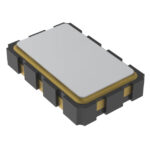 510DAA-CBAG
The activity of extra discounts on wholesale prices is in full swing…
Please fill in your contact information and we will send you the latest wholesale price list.





