 ChipApex | Global Electronic Components Supplier
SEARCH
Search Product
Search Post
— IC芯片 | 连接器 | 传感器 | 被动器件 —
Search productSearch post
— IC芯片 | 连接器 | 传感器 | 被动器件 —
Consult the customer manager about the wholesale price.
consultation hotline:86-132-6715-2157
email:[email protected]
Contact the product manager for consultation. One-stop consultation is available.
Do you want a lower wholesale price? Please send us your inquiry and we will reply immediately.
The Skyworks Solutions Inc. 512ABA000911AAG is a standard clock oscillator from the Si512 series, designed for general-purpose applications. It operates at a supply voltage of 3.3 V with a maximum current consumption of 43 mA. The device features LVPECL output format and provides frequency stability of ±20 ppm. It supports a frequency range of 0.1 to 250 MHz and includes an enable/disable function. The component is housed in a 6-SMD, no-lead package measuring 7.00 mm x 5.00 mm x 1.80 mm, suitable for surface-mount assembly.
Verify the specific output frequency against design requirements, as this part number belongs to a configurable family where frequency is determined by ordering suffixes. Confirm that the LVPECL output interface matches the receiving circuit's input specifications. Ensure the 3.3 V supply voltage aligns with the system power rails. Check the 7x5 mm package dimensions for PCB footprint compatibility. Validate the ±20 ppm frequency stability meets the application's jitter and accuracy constraints.
Select this model when LVPECL outputs are required for high-speed digital interfaces. The Si512 series offers flexibility through pin configuration options. Consider the 43 mA current draw for power budget calculations. The wide operating temperature range supports diverse environmental conditions. Verify availability of the specific frequency variant within the 0.1-250 MHz range.
This component is part of the Skyworks Si512 family of standard oscillators. These devices are known for their low phase noise and flexible configuration options. The Si512 series typically supports both single-ended and differential outputs depending on the specific variant. They are widely used in datacom, telecom, and industrial applications requiring precise timing signals.
The 512ACA000543AAGR is listed as a parameter-equivalent alternative within the same product family. Both parts share similar packaging and electrical characteristics. Verify that the replacement part matches the exact frequency and output format requirements before substitution.
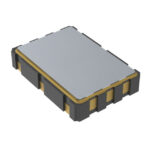 512ABA000911AAG
The activity of extra discounts on wholesale prices is in full swing…
Please fill in your contact information and we will send you the latest wholesale price list.






