 ChipApex | Global Electronic Components Supplier
SEARCH
Search Product
Search Post
— IC芯片 | 连接器 | 传感器 | 被动器件 —
Search productSearch post
— IC芯片 | 连接器 | 传感器 | 被动器件 —
Consult the customer manager about the wholesale price.
consultation hotline:86-132-6715-2157
email:[email protected]
Contact the product manager for consultation. One-stop consultation is available.
Do you want a lower wholesale price? Please send us your inquiry and we will reply immediately.
The 5447ADM is a decoder and driver integrated circuit manufactured by National Semiconductor, designed for TTL logic applications. It functions as a display driver within the power management IC category, specifically handling signal decoding and driving tasks for digital interfaces. The component supports standard TTL voltage levels and is packaged in a format suitable for industrial integration. As part of the 54-series logic family, it provides reliable signal conversion and amplification for connected display or interface systems.
Verify manufacturer authenticity through authorized distributors, as National Semiconductor assets are now managed by Texas Instruments. Confirm package type and date codes against official datasheets to ensure compatibility with existing PCB layouts. Check for obsolescence status given the age of the 54-series logic family. Request sample units for electrical testing before bulk procurement to validate performance in specific application environments.
Select this component when TTL-compatible decoding and driving are required for display or interface applications. Ensure system voltage requirements align with standard TTL specifications. Consider availability constraints due to the legacy nature of the 54-series logic family. Evaluate alternative modern equivalents if long-term supply stability is critical for the product lifecycle.
The 5447ADM belongs to the 54-series logic family, known for military-grade reliability and wide temperature range operation. National Semiconductor produced this series before its acquisition by Texas Instruments. The component serves as a specialized interface device, bridging control logic with display or output stages. Its classification under PMIC-display drivers highlights its role in managing signal integrity for visual output systems.
Texas Instruments may offer updated equivalents within their logic portfolio. Verify pinout compatibility and electrical characteristics before substituting. Legacy support documentation should be reviewed for any functional differences in newer generations of decoder/driver ICs.
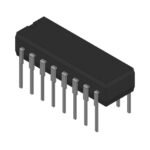 5447ADM
The activity of extra discounts on wholesale prices is in full swing…
Please fill in your contact information and we will send you the latest wholesale price list.





