 ChipApex | Global Electronic Components Supplier
SEARCH
Search Product
Search Post
— IC芯片 | 连接器 | 传感器 | 被动器件 —
Search productSearch post
— IC芯片 | 连接器 | 传感器 | 被动器件 —
Consult the customer manager about the wholesale price.
consultation hotline:86-132-6715-2157
email:[email protected]
Contact the product manager for consultation. One-stop consultation is available.
Do you want a lower wholesale price? Please send us your inquiry and we will reply immediately.
The Rochester Electronics 5490/BCA is a programmable interval timer utilizing advanced CHMOS III technology. It features three independent timers and supports six programmable modes for flexible timing control. The device operates on a parallel direct address interface with an 8-bit external data bus width. It is housed in a 24-pin plastic DIP package (R-PDIP-T24) and handles 16-bit data processing. Electrical specifications include a maximum clock frequency of 8 MHz, with a nominal supply voltage of 5 V operating within a range of 4.5 V to 5.5 V. The component is rated for industrial temperature conditions from -40 °C to 85 °C.
Verify the specific suffix and revision code against the original manufacturer datasheet to ensure functional compatibility. Confirm that the 5490/BCA designation aligns with the required logic family standards. Check for any pinout variations or electrical parameter deviations between different production lots. Ensure the supplier provides traceability documentation for heritage components. Validate that the package type matches the target PCB footprint requirements.
Select this component when legacy timing functionality is required in modern designs. Consider the 24-pin DIP package for prototyping or through-hole manufacturing needs. Evaluate the 8 MHz clock limit against system timing resolution requirements. Assess the need for CHMOS III technology benefits regarding power efficiency. Verify compatibility with existing parallel bus architectures before integration.
Rochester Electronics specializes in sustaining obsolete semiconductor products. They provide continued production of fully licensed and tested devices that are no longer manufactured by original suppliers. This approach ensures availability for critical applications where redesigning is not feasible. The company maintains extensive wafer and die banks to support long-term production needs across various logic families.
Direct substitutes may include other variants within the 5490 logic family. Verify pin-to-pin compatibility if replacing with similar interval timers. Check for equivalent timing modes and electrical characteristics. Consult official replacement lists for cross-references.
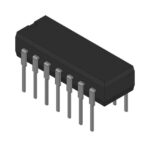 5490/BCA
The activity of extra discounts on wholesale prices is in full swing…
Please fill in your contact information and we will send you the latest wholesale price list.





