 ChipApex | Global Electronic Components Supplier
SEARCH
Search Product
Search Post
— IC芯片 | 连接器 | 传感器 | 被动器件 —
Search productSearch post
— IC芯片 | 连接器 | 传感器 | 被动器件 —
Consult the customer manager about the wholesale price.
consultation hotline:86-132-6715-2157
email:[email protected]
Contact the product manager for consultation. One-stop consultation is available.
Do you want a lower wholesale price? Please send us your inquiry and we will reply immediately.
The 54HC133J/B is a high-speed CMOS logic component manufactured by Rochester Electronics. It functions as a single 13-input NAND gate with an active-low output, belonging to the HC (High-speed CMOS) family. The device is designed for military-grade reliability and operates over the full commercial temperature range of -55°C to +125°C. It utilizes standard TTL-compatible inputs while maintaining low power consumption typical of CMOS technology. The component is housed in a ceramic dual-in-line package suitable for high-reliability applications.
Verify the specific suffix J/B against official manufacturer documentation to confirm package type and material specifications. Ensure that the procurement channel provides traceability to original manufacturing standards. Confirm compliance with relevant quality certifications such as MIL-PRF-38535 if required for your application. Request detailed test reports or lot traceability data upon order confirmation.
Select this component when a single 13-input NAND gate is required in a high-reliability environment. It is suitable for designs needing TTL-compatible inputs with CMOS drive capabilities. Consider the ceramic package for superior thermal and mechanical stability compared to plastic alternatives. Verify pinout compatibility with existing board layouts before finalizing the design.
This part belongs to the 54HC series of high-speed CMOS logic devices. The '54' prefix indicates military-grade qualification, while 'HC' denotes High-speed CMOS technology. Rochester Electronics supplies these components often as managed obsolescence solutions, ensuring availability for long-term production needs where original manufacturers may have discontinued direct sales.
Compatible substitutes include other 54HC133 variants from different manufacturers, provided they meet the same pinout and electrical specifications. Ensure any replacement maintains the ceramic package and military temperature rating if environmental resilience is critical. Verify that the substitute device supports the same 13-input NAND functionality without requiring circuit redesign.
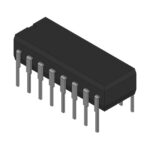 54HC133J/B
The activity of extra discounts on wholesale prices is in full swing…
Please fill in your contact information and we will send you the latest wholesale price list.





