 ChipApex | Global Electronic Components Supplier
SEARCH
Search Product
Search Post
— IC芯片 | 连接器 | 传感器 | 被动器件 —
Search productSearch post
— IC芯片 | 连接器 | 传感器 | 被动器件 —
Consult the customer manager about the wholesale price.
consultation hotline:86-132-6715-2157
email:[email protected]
Contact the product manager for consultation. One-stop consultation is available.
Do you want a lower wholesale price? Please send us your inquiry and we will reply immediately.
The Texas Instruments 5962-9172801Q3A is a military-grade scan test device featuring an octal bus transceiver. It operates within a supply voltage range of 4.5 V to 5.5 V and supports bidirectional data transfer across two ports. The component utilizes TTL output logic and provides common control functionality for boundary scan applications. Designed for high reliability, it functions reliably within an extended temperature range from -55°C to +125°C. The device is housed in a 28-pin LCCC (FK) package, suitable for surface mount installation.
Verify the specific Q3A suffix against official Texas Instruments documentation to confirm the exact package variant and qualification level. Ensure compatibility with existing boundary scan test protocols before integration. Confirm that the LCCC footprint matches the target PCB design constraints. Validate that the operating voltage requirements align with the system power distribution network specifications.
Select this component when designing systems that require integrated octal bus transceivers for boundary scan testing rather than discrete logic gates. Consider the 28-pin LCCC package dimensions for board space limitations. Evaluate the need for military-grade temperature ratings (-55°C to +125°C) versus commercial alternatives. Assess the requirement for common control mechanisms to simplify test pattern generation.
This part belongs to the Texas Instruments family of military-grade scan test devices. It serves as a specialized interface for verifying digital circuit integrity through boundary scan methodologies. The device complements standard logic families by providing dedicated test access points. Its design focuses on maintaining signal integrity during comprehensive system-level diagnostics.
Consult official Texas Instruments substitution guides for verified equivalents. Cross-reference pinouts and electrical characteristics carefully. Ensure any alternative maintains the same LCCC package configuration and military qualification standards.
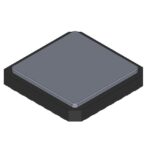 5962-9172801Q3A
The activity of extra discounts on wholesale prices is in full swing…
Please fill in your contact information and we will send you the latest wholesale price list.





