 ChipApex | Global Electronic Components Supplier
SEARCH
Search Product
Search Post
— IC芯片 | 连接器 | 传感器 | 被动器件 —
Search productSearch post
— IC芯片 | 连接器 | 传感器 | 被动器件 —
Consult the customer manager about the wholesale price.
consultation hotline:86-132-6715-2157
email:[email protected]
Contact the product manager for consultation. One-stop consultation is available.
Do you want a lower wholesale price? Please send us your inquiry and we will reply immediately.
The Texas Instruments 5962-9318601M3A is a military-grade scan test device featuring octal bus transceivers, designed for compatibility with the IEEE Standard 1149.1-1990 (JTAG) Test Access Port. It belongs to the SCOPE E family of testability products. The component utilizes a 28-pin LCCC (FK) package and supports through-hole mounting. It operates within a supply voltage range of 2 V to 5.5 V and functions reliably across an extended temperature range from -55°C to +125°C.
Verify that the specific suffix M3A corresponds to the required military qualification and package variant. Confirm that the LCCC (FK) footprint matches the PCB design constraints. Ensure the procurement channel is authorized for defense-grade components to guarantee authenticity and traceability. Check for any specific handling instructions related to the ceramic package type.
Select this component when designing systems that require standardized JTAG compliance for manufacturing testability. It is appropriate for applications demanding operation in extreme temperatures where standard commercial parts may fail. Consider the physical size of the 28-pin LCCC package during layout planning. Evaluate if the octal bus transceiver density meets the system's signal routing needs without excessive component count.
This part is part of Texas Instruments' SCOPE E family, which focuses on enhancing circuit testability. Unlike general-purpose logic gates, these devices are optimized for built-in self-test (BIST) and boundary scan architectures. The 5962 prefix indicates a military-grade version of a commercial TI part, ensuring higher reliability standards and stricter manufacturing controls compared to standard industrial or consumer variants.
Direct replacements must maintain JTAG compatibility and octal transceiver functionality. Verify pinout compatibility with the original 28-pin LCCC (FK) package. Ensure substitute parts meet the same -55°C to +125°C temperature rating and voltage specifications. Cross-reference with other members of the SCOPE E family for potential functional equivalents.
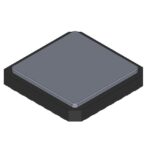 5962-9318601M3A
The activity of extra discounts on wholesale prices is in full swing…
Please fill in your contact information and we will send you the latest wholesale price list.





