 ChipApex | Global Electronic Components Supplier
SEARCH
Search Product
Search Post
— IC芯片 | 连接器 | 传感器 | 被动器件 —
Search productSearch post
— IC芯片 | 连接器 | 传感器 | 被动器件 —
Consult the customer manager about the wholesale price.
consultation hotline:86-132-6715-2157
email:[email protected]
Contact the product manager for consultation. One-stop consultation is available.
Do you want a lower wholesale price? Please send us your inquiry and we will reply immediately.
The Texas Instruments 5962-9453001M2A is a military-grade, improved current mode PWM controller belonging to the UC1856 series. It operates within an extended temperature range of -55°C to +125°C and utilizes a 20-pin package. The device supports multiple converter topologies including Boost, Flyback, Forward, Full Bridge, Half Bridge, and Push-Pull configurations. Key electrical specifications include a switching frequency of 1 MHz, a maximum duty cycle of 50%, and an output drive current capability of 1.5 A.
Verify component authenticity through authorized channels due to the military grade designation (5962 prefix). Confirm specific suffix requirements against official datasheets as packaging or material variations may exist. Ensure compliance with relevant defense standards during integration. Check for obsolescence status as these components often have limited production runs. Validate thermal performance in final assembly given the specified operating temperature range.
Select this component when designing power supplies requiring strict military environmental qualifications and high-frequency operation. It is suitable for applications demanding precise current mode control across multiple standard converter topologies. Consider the 20-pin package constraints and thermal dissipation requirements for the target enclosure. Evaluate system efficiency needs against the 1 MHz switching frequency capabilities.
This part is a specialized variant of the UC1856 family, distinguished by its 5962 military qualification number. It shares functional similarities with commercial counterparts but meets stricter reliability and environmental testing standards required for defense and aerospace electronics. The device serves as a core control element in regulated power conversion stages.
Direct substitutes include other qualified UC1856 variants such as 5962-9453001VEA. Verify pin compatibility and electrical parameters before substitution. Commercial equivalents like the UCC28560 require significant circuit redesign and do not offer direct pin-for-pin replacement.
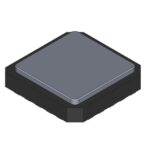 5962-9453001M2A
The activity of extra discounts on wholesale prices is in full swing…
Please fill in your contact information and we will send you the latest wholesale price list.





