 ChipApex | Global Electronic Components Supplier
SEARCH
Search Product
Search Post
— IC芯片 | 连接器 | 传感器 | 被动器件 —
Search productSearch post
— IC芯片 | 连接器 | 传感器 | 被动器件 —
Consult the customer manager about the wholesale price.
consultation hotline:86-132-6715-2157
email:[email protected]
Contact the product manager for consultation. One-stop consultation is available.
Do you want a lower wholesale price? Please send us your inquiry and we will reply immediately.
The Altera 5AGXBA7D4F31I5G is an Arria V GX Field Programmable Gate Array (FPGA) integrated circuit. It features 289,000 logic elements and 132,075 Adaptive Logic Modules (ALMs). The device includes 16.86 Mbits of embedded memory and supports up to 544 input/output terminals. It operates within a supply voltage range of 1.07V to 1.13V and functions at temperatures between -40°C and +100°C TJ. The component utilizes an 896-ball FCBGA package and incorporates transceivers capable of data rates up to 12.5 Gb/s.
Verify the specific suffix codes against official Intel/Altera documentation to confirm temperature grade and package variant accuracy. Ensure compatibility with existing board layouts regarding the 896-ball FCBGA footprint and pin assignments. Confirm RoHS compliance status matches current regulatory requirements for the target deployment region. Validate that the selected revision aligns with the intended design lifecycle and long-term availability needs.
Compare the 289,000 logic element count against project complexity to ensure sufficient resource headroom. Evaluate the 544 I/O limit against system interface requirements to prevent pin scarcity during integration. Assess the 16.86 Mbit memory capacity for data buffering needs relative to alternative devices in the Arria V family. Consider the thermal performance characteristics inherent to the FCBGA package under expected operating loads.
This component belongs to the Arria V GX series, designed for cost-sensitive applications requiring moderate to high performance. It shares architectural similarities with other Arria V variants but offers specific logic density and I/O configurations tailored for general-purpose high-speed digital processing. The series emphasizes energy efficiency alongside computational throughput for scalable system designs.
Direct substitutes within the same package and pinout include other Arria V GX devices with comparable logic densities, such as the 5AGXBA5 or 5AGXBA3 variants, provided their specific speed grades and memory sizes meet design constraints. Cross-family migration to Agilex or Stratix series requires significant schematic and firmware redesign due to architectural differences.
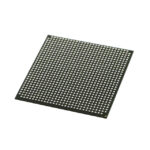 5AGXBA7D4F31I5G
The activity of extra discounts on wholesale prices is in full swing…
Please fill in your contact information and we will send you the latest wholesale price list.






