 ChipApex | Global Electronic Components Supplier
SEARCH
Search Product
Search Post
— IC芯片 | 连接器 | 传感器 | 被动器件 —
Search productSearch post
— IC芯片 | 连接器 | 传感器 | 被动器件 —
Consult the customer manager about the wholesale price.
consultation hotline:86-132-6715-2157
email:[email protected]
Contact the product manager for consultation. One-stop consultation is available.
Do you want a lower wholesale price? Please send us your inquiry and we will reply immediately.
The Altera 5AGXFA5H4F35C4N is an Arria V GX Field Programmable Gate Array (FPGA) manufactured using a 28nm low-power process technology. It features 190,000 logic elements and 8,962 Logic Array Blocks (LABs). The device integrates approximately 12.9 Mbit of embedded memory and provides 544 I/O pins. It includes 24 high-speed transceivers capable of data rates up to 6.5536 Gbps. The component operates at a maximum frequency of 670 MHz and utilizes an FBGA-1152 package with dimensions of 35x35 mm.
Verify the specific suffix designation to confirm the operating temperature range and speed grade, as these attributes vary across the product family. Confirm current availability status, as certain variants within the Arria V series have reached end-of-life or exhibit restricted supply conditions. Ensure compatibility with existing design tools and verify that the selected package matches the target PCB footprint requirements before finalizing procurement decisions.
Select this component when a balance of moderate logic density and high-speed serial connectivity is required. The 28nm process offers power advantages over older nodes while maintaining sufficient performance for complex parallel processing tasks. Consider the 544 I/O count for system integration flexibility. Evaluate thermal management solutions suitable for the FBGA-1152 package, as heat dissipation impacts long-term reliability in enclosed industrial environments.
This model belongs to the Arria V GX family, which targets cost-sensitive applications requiring significant I/O bandwidth and serial transmission capabilities. The GX series distinguishes itself by offering a higher ratio of transceivers relative to logic resources compared to other Arria V variants. It serves as a bridge between lower-end Cyclone devices and higher-end Stratix families, providing a specialized solution for mid-range high-speed data acquisition and processing needs.
Direct replacements are limited due to the discontinued status of many Arria V components. Potential alternatives include newer Intel Agilex series FPGAs for future-proofing, though pinouts and toolchains will differ significantly. Designers may need to adapt their hardware architecture when migrating to successor platforms.


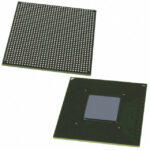 5AGXFA5H4F35C4N
The activity of extra discounts on wholesale prices is in full swing…
Please fill in your contact information and we will send you the latest wholesale price list.



