 ChipApex | Global Electronic Components Supplier
SEARCH
Search Product
Search Post
— IC芯片 | 连接器 | 传感器 | 被动器件 —
Search productSearch post
— IC芯片 | 连接器 | 传感器 | 被动器件 —
Consult the customer manager about the wholesale price.
consultation hotline:86-132-6715-2157
email:[email protected]
Contact the product manager for consultation. One-stop consultation is available.
Do you want a lower wholesale price? Please send us your inquiry and we will reply immediately.
The Altera 5AGXMA3D4F31I5N is an Arria V GX Field Programmable Gate Array (FPGA) housed in an 896-ball FBGA package. It features 156,000 logic elements and 58,900 adaptive logic modules. The device includes 10.26 Mbit of embedded memory and supports up to 416 I/Os. Operating at a minimum voltage of 1.1 V and maximum of 1.1 V, it functions within a temperature range of -40°C to +100°C. It utilizes 9 transceivers with a data rate of 6.5536 Gb/s and a maximum operating frequency of 1.05 GHz.
This component is designated as obsolete and no longer manufactured by Altera. Verification of authenticity is critical when sourcing from secondary markets. Buyers must confirm the specific suffix variations and ensure compliance with RoHS standards. Availability is restricted to existing stock or surplus channels, requiring careful inspection of physical condition and packaging integrity before integration into production lines.
Engineers should evaluate the 156,000 LE capacity against current project complexity to ensure sufficient resource headroom. The 896-pin FBGA package requires compatible PCB layout strategies for thermal management and signal integrity. Designers must account for the 1.1 V core voltage requirements and verify that the 9 available transceivers meet bandwidth specifications for target interfaces.
The 5AGXMA3D4F31I5N belongs to the Arria V GX family, which targets cost-sensitive applications requiring moderate performance. This series bridges the gap between lower-end Cyclone devices and higher-end Stratix families. The part represents a mature technology node, offering established design tools and IP libraries, though it has reached end-of-life status in favor of newer Agilex architectures.
Direct substitutes are limited due to the discontinued status. Potential migration paths include the Arria 10 GX series for enhanced performance or the Cyclone V GX family for similar form factors. Engineers should consult Intel's official migration guides to assess pin compatibility and feature parity when transitioning to alternative devices.
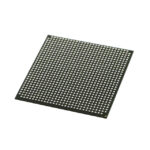 5AGXMA3D4F31I5N
The activity of extra discounts on wholesale prices is in full swing…
Please fill in your contact information and we will send you the latest wholesale price list.






