 ChipApex | Global Electronic Components Supplier

SEARCH
Search Product
Search Post
— IC芯片 | 连接器 | 传感器 | 被动器件 —
Search productSearch post
— IC芯片 | 连接器 | 传感器 | 被动器件 —
Consult the customer manager about the wholesale price.
consultation hotline:86-132-6715-2157
email:[email protected]
Contact the product manager for consultation. One-stop consultation is available.
Do you want a lower wholesale price? Please send us your inquiry and we will reply immediately.
The Altera 5ASXBB5D4F35I5N is an Arria V SX System on Chip FPGA featuring a dual-core ARM Cortex-A9 MPCore processor with CoreSight debug support. It integrates 462,000 logic elements and 174,340 adaptive logic modules within a 1517-ball FBGA package. The device operates at a maximum clock frequency of 800 MHz for the processor core. Embedded memory capacity totals 22.29 Mbit, supporting complex data processing tasks. It includes 18 high-speed transceivers capable of significant data throughput. The component supports industrial temperature ranges from -40°C to +100°C and utilizes a 1.1 V operating supply voltage.
Verify the specific suffix I5N confirms the industrial temperature range and speed grade required for your design environment. Confirm RoHS compliance status and moisture sensitivity level handling procedures during assembly. Check for any product change notices regarding labeling or packaging updates that may affect inventory management. Ensure the supplier provides traceability documentation for this discontinued series component.
Compare the 1517-pin BGA footprint against available PCB space and routing constraints. Evaluate whether the 800 MHz processor speed meets real-time processing demands compared to higher-performance Agilex families. Assess if the 18 transceivers are sufficient for all required serial interfaces or if additional external PHYs are needed. Consider the availability of development tools and IP cores compatible with the Arria V architecture.
This component belongs to the Arria V SX family, designed for cost-sensitive applications combining ARM processing with FPGA flexibility. It sits between the lower-end Arria V ST and the higher-performance GX/GT series in terms of transceiver count and power consumption. The 5ASXBB5 variant specifically denotes the 1517-ball package option within this series.
Direct pin-to-pin replacements are not available due to architectural differences. Consider Intel Agilex 3 or Agilex 5 devices for modern alternatives, though these require significant schematic and layout redesigns. Review Intel's migration guides for software compatibility when transitioning from Quartus Prime Standard Edition to newer versions.
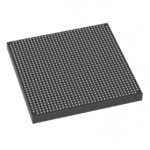 5ASXBB5D4F35I5N

The activity of extra discounts on wholesale prices is in full swing…
Please fill in your contact information and we will send you the latest wholesale price list.




