 ChipApex | Global Electronic Components Supplier

SEARCH
Search Product
Search Post
— IC芯片 | 连接器 | 传感器 | 被动器件 —
Search productSearch post
— IC芯片 | 连接器 | 传感器 | 被动器件 —
Consult the customer manager about the wholesale price.
consultation hotline:86-132-6715-2157
email:[email protected]
Contact the product manager for consultation. One-stop consultation is available.
Do you want a lower wholesale price? Please send us your inquiry and we will reply immediately.
The Altera 5ASXBB5D4F40C5G is a System on Chip (SoC) device within the Arria V SX FPGA series. It integrates a dual-core ARM Cortex-A9 MPCore processor with CoreSight debug capabilities and an FPGA fabric containing 462K logic elements. The component operates at a maximum frequency of 800MHz and includes 64KB of RAM. It features DMA, POR, and WDT peripherals, supporting interfaces such as Ethernet, I2C, SPI, UART/USART, USB OTG, MMC/SD/SDIO, and EBI/EMI. The device is housed in a 1517-FBGA package measuring 40x40mm, offering 208 MCU I/Os and 540 FPGA I/Os, with a junction temperature range of 0°C to 85°C.
Verify the specific suffix codes against official Intel/Altera documentation to confirm package type, temperature grade, and lead-free status. Ensure compatibility with existing PCB footprints for the 1517-FBGA form factor. Confirm that the required logic capacity and memory resources meet design specifications before ordering. Check for any recent Product Change Notifications regarding labeling or material composition updates.
Select this model when both ARM processing power and significant FPGA logic density are required in a single component. Compare against the 5ASXBB3 variant if lower logic counts suffice, or consider higher-performance families for speeds exceeding 800MHz. Evaluate pin count requirements carefully, as the 1517 package offers fixed I/O distributions for both MCU and FPGA sections.
This component belongs to the Arria V SX family, designed for cost-sensitive applications requiring moderate performance. It bridges the gap between pure microcontrollers and large-scale FPGAs by integrating a hardened ARM processor core directly onto the FPGA die. This architecture reduces board space and power consumption compared to discrete solutions.
Direct functional replacements within the same package and feature set are limited due to specific logic element counts. Consider the 5ASXBB3D4F40C5G for reduced logic needs or the 5ASXMB series for different transceiver configurations. Verify pin-to-pin compatibility and software toolchain support when migrating to alternative SoC FPGA devices.
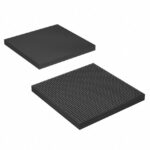 5ASXBB5D4F40C5G

The activity of extra discounts on wholesale prices is in full swing…
Please fill in your contact information and we will send you the latest wholesale price list.




