 ChipApex | Global Electronic Components Supplier

SEARCH
Search Product
Search Post
— IC芯片 | 连接器 | 传感器 | 被动器件 —
Search productSearch post
— IC芯片 | 连接器 | 传感器 | 被动器件 —
Consult the customer manager about the wholesale price.
consultation hotline:86-132-6715-2157
email:[email protected]
Contact the product manager for consultation. One-stop consultation is available.
Do you want a lower wholesale price? Please send us your inquiry and we will reply immediately.
The Altera 5ASXFB5G4F35C5N is an Arria V SoC SX System on Chip FPGA featuring a dual-core ARM Cortex-A9 processor running at a maximum clock frequency of 1.05 GHz. It includes 2 x 32 kB L1 instruction and data caches per core. The programmable logic fabric provides 462,000 Logic Elements (LEs) organized into 174,340 Adaptive Logic Modules (ALMs) across 17,434 Logic Array Blocks (LABs). Embedded memory capacity totals 22.29 Mbit. The device integrates 18 transceivers and operates within a junction temperature range of 0°C to +85°C using a 1.1 V supply voltage. It is housed in a BGA-1152 package.
This component is officially listed as End-of-Life (EOL) by the manufacturer. Verification of current availability requires checking authorized distributors for remaining stock or obsolete inventory. Buyers must confirm authenticity through official channels due to the discontinued status. Replacement strategies should be initiated immediately to ensure long-term supply chain stability for production environments.
Engineers selecting this part should verify that the 462,000 LE density meets specific logic resource requirements. The dual-core ARM architecture suitability must be assessed against computational load expectations. Package compatibility with the target PCB footprint and thermal management capabilities are critical design constraints. Ensure the 1.1 V power domain aligns with system voltage rails.
This part belongs to the Arria V SoC SX family, designed for applications balancing processing power with programmable logic flexibility. It sits between lower-density models and higher-end GX variants, offering a specific trade-off between ARM processing capability and FPGA fabric size. The F35 package variant indicates a specific pin count and physical dimension standard used in mid-range system designs.
Public confirmed substitute part numbers are not available in the provided documentation. Due to the End-of-Life status, direct pin-to-pin replacements may not exist within the same series. Designers should evaluate newer Intel Agilex or Stratix families for functional equivalents, though architectural differences require schematic and firmware redesign.
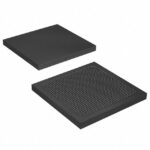 5ASXFB5G4F35C5G

The activity of extra discounts on wholesale prices is in full swing…
Please fill in your contact information and we will send you the latest wholesale price list.




