 ChipApex | Global Electronic Components Supplier
SEARCH
Search Product
Search Post
— IC芯片 | 连接器 | 传感器 | 被动器件 —
Search productSearch post
— IC芯片 | 连接器 | 传感器 | 被动器件 —
Consult the customer manager about the wholesale price.
consultation hotline:86-132-6715-2157
email:[email protected]
Contact the product manager for consultation. One-stop consultation is available.
Do you want a lower wholesale price? Please send us your inquiry and we will reply immediately.
The Altera 5M160ZM100I5N is a MAX V series Complex Programmable Logic Device (CPLD) manufactured using 90 nm CMOS technology. It features 160 logic elements and 128 macrocells, housed in a 100-pin MBGA package measuring 6x6 mm. The device supports system-in-system programming via JTAG and operates within an industrial temperature range of -40°C to +100°C. Key electrical parameters include a maximum propagation delay of 7.5 ns and an internal core voltage supply ranging from 1.71V to 1.89V.
Verify the specific manufacturing date code and lot number against current Intel/Altera Product Change Notices (PCNs). Confirm that the supplier provides valid RoHS compliance documentation and moisture sensitivity level (MSL 3) handling certificates. Ensure the component is sourced from authorized distributors to avoid counterfeit parts, as lead-free packaging requirements must be strictly met for industrial certification.
Select this model when a non-volatile CPLD with low pin count is required to eliminate external configuration flash chips. Compare the 160 LE capacity against project logic requirements; if higher density is needed, consider the EPM240 or EPM570 variants. Verify that the 7.5 ns delay meets the target clock frequency constraints. Ensure the design toolchain supports the MAX V family, typically requiring older versions of Quartus II software.
This component belongs to the Intel MAX V family, which succeeded the MAX II series. It offers improved performance and lower power consumption compared to previous generations while maintaining the ease of use associated with CPLDs. The 'Z' suffix in the part number indicates the specific speed grade and package variant within the 5M160 device family.
Direct pin-to-pin replacements are limited within the same package. The EPM240T100I5N offers similar functionality but with different electrical characteristics. For upward migration, the EPM570M100I5N provides more logic resources but requires verification of timing compatibility. Always validate schematic and layout changes before substituting programmable logic devices.
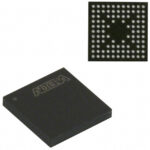 5M160ZM100I5N
The activity of extra discounts on wholesale prices is in full swing…
Please fill in your contact information and we will send you the latest wholesale price list.





