 ChipApex | Global Electronic Components Supplier
SEARCH
Search Product
Search Post
— IC芯片 | 连接器 | 传感器 | 被动器件 —
Search productSearch post
— IC芯片 | 连接器 | 传感器 | 被动器件 —
Consult the customer manager about the wholesale price.
consultation hotline:86-132-6715-2157
email:[email protected]
Contact the product manager for consultation. One-stop consultation is available.
Do you want a lower wholesale price? Please send us your inquiry and we will reply immediately.
The Altera 5M570ZE64I5N is a Complex Programmable Logic Device (CPLD) belonging to the MAX V family. It features 570 logic elements and 440 equivalent macrocells, housed in a 64-pin TQFP package. The device utilizes non-volatile Flash technology for configuration, allowing immediate operation upon power-up without external memory. It supports System In-Programmability (ISP) via JTAG and operates within an industrial temperature range of -40°C to +100°C. Key electrical parameters include an internal core voltage of 1.71V to 1.89V and support for I/O voltages of 1.2V, 1.5V, 1.8V, 2.5V, and 3.3V. The maximum propagation delay is 9ns.
Verify the specific suffix 'E64' against official Intel/Altera documentation to confirm the exact package type and pinout, as standard MAX V listings often default to TQFP or FBGA variants. Ensure compatibility with Quartus II Web Edition software, as newer Quartus Prime versions may not support this legacy MAX V series. Confirm RoHS compliance status for the specific manufacturing batch.
Select this component when a small form factor (64-pin) is required alongside moderate logic density (570 LEs). It is suitable for applications needing non-volatile configuration and low standby power. Compare against the EPM240 series if lower cost is prioritized over logic capacity, or against MAX 10/FPGA families if high-speed DSP capabilities are needed.
This part belongs to the Intel MAX V family, designed as a low-cost, low-power replacement for older EPROM-based CPLDs like the MAX 7000 series. The 5M570Z variant specifically denotes the 440-macrocell density level within this lineup, offering a balance between resource availability and package size for embedded logic tasks.
Direct pin-to-pin replacements are limited due to the proprietary MAX V architecture. Consider the EPM240T100C5N for smaller logic needs or the 5M1270ZT144C5N for higher density in larger packages. Verify that any substitute supports the required I/O voltage levels and non-volatile configuration requirements.
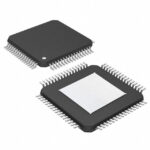 5M570ZE64I5N
The activity of extra discounts on wholesale prices is in full swing…
Please fill in your contact information and we will send you the latest wholesale price list.





