 ChipApex | Global Electronic Components Supplier
SEARCH
Search Product
Search Post
— IC芯片 | 连接器 | 传感器 | 被动器件 —
Search productSearch post
— IC芯片 | 连接器 | 传感器 | 被动器件 —
Consult the customer manager about the wholesale price.
consultation hotline:86-132-6715-2157
email:[email protected]
Contact the product manager for consultation. One-stop consultation is available.
Do you want a lower wholesale price? Please send us your inquiry and we will reply immediately.
The IDT5T905PGGI8 is a clock buffer and fan-out device manufactured by Renesas Electronics Corporation. It functions as a single circuit, 1:5 ratio fan-out buffer designed to distribute clock signals with high integrity. The component supports multiple input standards including eHSTL, HSTL, LVPECL, and LVTTL, while providing outputs in eHSTL, HSTL, and LVTTL formats. It operates within a supply voltage range of 2.4V to 2.6V and supports maximum frequencies up to 250 MHz. The device is housed in a 28-TSSOP package with a width of 4.40mm and is rated for an operating temperature range of -40°C to 85°C.
The IDT5T905PGI variant is listed as obsolete or not recommended for new designs in distributor catalogs. Verification of the specific 'GGI8' suffix availability is required, as standard listings often reference the base IDT5T905PGI part number. Users should confirm current production status and lead times directly with authorized Renesas distributors or the manufacturer, as stock levels for obsolete components are limited and subject to change.
Select this component when a 1:5 fan-out buffer is required for non-differential clock signals. Ensure the system design accommodates the 2.4V to 2.6V supply voltage requirement. Verify that the input signal source matches one of the supported standards (eHSTL, HSTL, LVPECL, or LVTTL). The 28-TSSOP package must be compatible with the PCB footprint and assembly processes. Consider thermal management within the -40°C to 85°C operating range.
This component belongs to the IDT5T905 family of clock buffers. It is produced by Renesas Electronics Corporation, which acquired Integrated Device Technology (IDT). The part serves as a legacy solution for clock distribution in systems requiring specific HSTL/LVTTL compatibility before newer programmable alternatives became prevalent.
Publicly confirmed direct substitute part numbers for IDT5T905PGGI8 are not available in the provided data. Due to the obsolete status of the base IDT5T905PGI, alternative solutions may require redesigning the clock tree using modern programmable clock generators or buffers with compatible pinouts and electrical specifications.
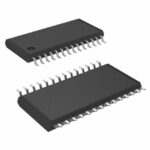 5T905PGGI8
The activity of extra discounts on wholesale prices is in full swing…
Please fill in your contact information and we will send you the latest wholesale price list.





