 ChipApex | Global Electronic Components Supplier
SEARCH
Search Product
Search Post
— IC芯片 | 连接器 | 传感器 | 被动器件 —
Search productSearch post
— IC芯片 | 连接器 | 传感器 | 被动器件 —
Consult the customer manager about the wholesale price.
consultation hotline:86-132-6715-2157
email:[email protected]
Contact the product manager for consultation. One-stop consultation is available.
Do you want a lower wholesale price? Please send us your inquiry and we will reply immediately.
The 5T9304EJGI8 is a programmable clock generator from the PhiClock family, designed for high-performance data communication applications. It features an integrated phase-locked loop (PLL) and supports multiple output interface standards including LVDS and LP-HCSL. The device accepts a single-ended or differential input clock and generates up to four differential outputs with low jitter characteristics. It operates within a specified voltage range and temperature spectrum, suitable for PCIe Gen1 through Gen4 compliance. The component is housed in a compact LGA package with 24 leads, facilitating integration into space-constrained industrial and consumer electronics designs requiring precise timing signals.
Verify the specific ordering suffix to ensure correct package type and temperature rating. Confirm that the device configuration matches the target application's frequency and output standard requirements. Check for RoHS compliance status and moisture sensitivity level before procurement. Ensure the supplier provides valid traceability documentation. Review the latest datasheet revision for any updates to electrical characteristics or pin assignments.
Select this component when a low-jitter, programmable clock source is required for PCIe or similar high-speed serial interfaces. Consider the available output drive strengths and voltage levels to match the load requirements. Evaluate the input clock frequency range to ensure compatibility with the system oscillator. Assess the package size constraints against the PCB layout capabilities. Verify thermal performance under maximum operating conditions.
This part belongs to Renesas' PhiClock family of programmable clock generators. These devices are engineered to replace fixed-frequency oscillators and crystal units, offering design flexibility. The family is widely used in networking, storage, and computing applications where precise clock synchronization is critical. The 5T9304 variant specifically targets multi-output clock distribution needs with advanced jitter filtering capabilities.
Consult official substitution lists for direct replacements. Verify pin-to-pin compatibility and electrical parameter equivalence. Ensure the alternative device supports the same output standards and jitter specifications. Check for availability and lifecycle status of potential substitutes.
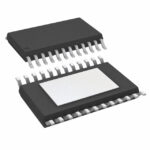 5T9304EJGI8
The activity of extra discounts on wholesale prices is in full swing…
Please fill in your contact information and we will send you the latest wholesale price list.





