 ChipApex | Global Electronic Components Supplier

SEARCH
Search Product
Search Post
— IC芯片 | 连接器 | 传感器 | 被动器件 —
Search productSearch post
— IC芯片 | 连接器 | 传感器 | 被动器件 —
Consult the customer manager about the wholesale price.
consultation hotline:86-132-6715-2157
email:[email protected]
Contact the product manager for consultation. One-stop consultation is available.
Do you want a lower wholesale price? Please send us your inquiry and we will reply immediately.
The IDT6116SA120TDB is a standard static random-access memory (SRAM) integrated circuit manufactured by Integrated Device Technology. It features a memory organization of 2K words by 8 bits, providing a total storage capacity of 16 kilobits. The device operates in asynchronous mode with a maximum access time of 120 nanoseconds. It utilizes CMOS technology and is housed in a 24-pin ceramic dual in-line package (CDIP). The component supports a single power supply voltage range typical for 5V logic systems and includes three-state outputs for data bus interfacing.
Verify the specific suffix 'TDB' to confirm the ceramic DIP-24 package and leaded composition, as other suffixes indicate different packages or RoHS compliance status. Confirm current availability status, as this component may be subject to discontinuation notices from Renesas Electronics following the acquisition of IDT assets. Ensure compatibility with existing PCB footprints designed for CDIP-24 components before procurement.
Select this part when a robust ceramic package is required for high-reliability applications where plastic packages are unsuitable. The 120 ns access time suits slower microprocessor interfaces or simple buffering tasks. Consider alternative pin-compatible parts if higher speed or surface-mount packaging is needed. Verify that the 5V logic levels match the system voltage requirements without additional level shifting.
The 6116SA series represents a family of standard SRAMs widely used in legacy and high-reliability designs. IDT was acquired by Renesas Electronics, which continues to manage the product line. This specific variant belongs to the older generation of SRAMs characterized by through-hole ceramic packaging, often preferred in military and industrial sectors for superior thermal and mechanical stability compared to plastic equivalents.
Direct pin-compatible replacements include the IDT6116SA120PB (plastic DIP) or IDT6116SA120LZ (lead-free ceramic), provided package material differences are acceptable. Other speeds in the series like 70ns or 55ns variants offer faster performance but require verification of timing constraints.
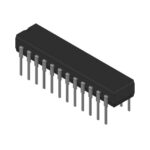 6116SA120TDB

The activity of extra discounts on wholesale prices is in full swing…
Please fill in your contact information and we will send you the latest wholesale price list.





