 ChipApex | Global Electronic Components Supplier
SEARCH
Search Product
Search Post
— IC芯片 | 连接器 | 传感器 | 被动器件 —
Search productSearch post
— IC芯片 | 连接器 | 传感器 | 被动器件 —
Consult the customer manager about the wholesale price.
consultation hotline:86-132-6715-2157
email:[email protected]
Contact the product manager for consultation. One-stop consultation is available.
Do you want a lower wholesale price? Please send us your inquiry and we will reply immediately.
The DB Products 62T3120LFLA is a piezoelectric buzzer designed for audible signaling applications. It operates on a DC voltage supply and generates sound through mechanical vibration of a piezo element. The component features a specific resonant frequency to ensure clear acoustic output. It is constructed with durable materials suitable for various environmental conditions. The device includes integrated driving circuitry for direct connection to control signals. This model is engineered for reliability in consumer and industrial electronic devices requiring compact audio indicators.
Verify the exact electrical specifications, including operating voltage and current consumption, against the official datasheet before integration. Confirm the pinout configuration and mounting hole dimensions to ensure compatibility with the target PCB or enclosure design. Check for any specific RoHS compliance documentation required by your procurement policy. Ensure the supplier provides genuine components with traceable manufacturing dates.
Select this component based on its acoustic output requirements and physical size constraints. Consider the operating voltage range of your system to match the buzzer's rated input. Evaluate the environmental conditions, such as temperature and humidity, to ensure the component's durability. Compare the resonant frequency with other available models to achieve the desired auditory profile. Verify the mounting method aligns with your assembly process.
DB Products Limited is a Hong Kong-based manufacturer specializing in acoustic components since 1976. The company develops a wide range of products including buzzers, piezo elements, microphones, and speakers. Their portfolio includes over 5000 models serving various industries. The 62T3120LFLA belongs to their line of piezoelectric buzzers designed for reliable audible signaling in electronic devices.
Consult the official DB Products datasheet for cross-reference information. Identify equivalent parts from other manufacturers that match the electrical and mechanical specifications. Verify that any substitute component meets the same acoustic performance standards. Ensure the replacement part has compatible mounting dimensions and pin configurations.
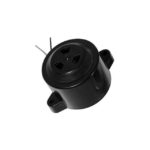 62T3120LFLA
The activity of extra discounts on wholesale prices is in full swing…
Please fill in your contact information and we will send you the latest wholesale price list.





