ChipApex | Global Electronic Components Supplier

SEARCH
Search Product
Search Post
— IC芯片 | 连接器 | 传感器 | 被动器件 —
Search productSearch post
— IC芯片 | 连接器 | 传感器 | 被动器件 —
Consult the customer manager about the wholesale price.
consultation hotline:86-132-6715-2157
email:[email protected]
Contact the product manager for consultation. One-stop consultation is available.
Do you want a lower wholesale price? Please send us your inquiry and we will reply immediately.
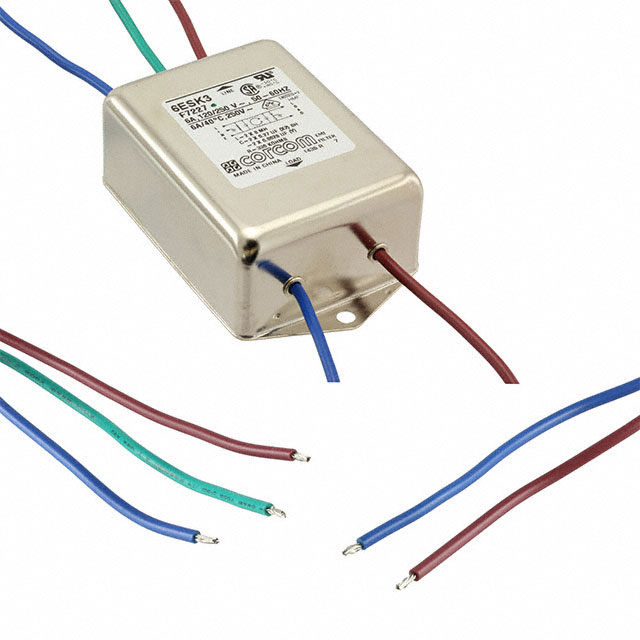
The TE Connectivity Corcom Filters 6ESK3 is a single-phase EMI/RFI power line filter designed for chassis mounting. It operates at 50 Hz and 60 Hz with a voltage rating of 250 VAC and a current rating of 6 A. The component utilizes wire leads for termination and features a flange mount style. It belongs to the SK series, which employs higher element values than general-purpose K series filters to manage conducted emissions effectively. The unit has a leakage current of 360 uA and holds UL, CSA, and VDE compliance certifications.
Verify the specific datasheet version and certification status (UL, CSA, VDE) prior to procurement, as regulatory approvals can vary by manufacturing batch or region. Confirm that the wire lead termination type matches your assembly requirements. Ensure the chassis mounting dimensions align with your enclosure design. Cross-reference the manufacturer part number 6ESK3 with any alternative designations such as 6609035-6 to ensure correct sourcing from authorized channels.
Select the 6ESK3 when high-performance noise reduction is required for sensitive electronic equipment operating at 6 A. This model is appropriate for designs needing low leakage current characteristics mandated by specific safety standards like VDE and UL 544. Consider this filter over standard K series units if line-to-ground and line-to-line emissions are significant concerns. Verify that the chassis mount form factor fits the available space in the target application enclosure.
The 6ESK3 is part of the SK (Super K) series from TE Connectivity Corcom Filters. This series is engineered specifically for superior RFI suppression compared to the general-purpose K series. The SK series is characterized by its use of larger passive components to achieve deeper insertion loss, making it ideal for stringent electromagnetic compatibility environments where standard filters may not suffice.
Consult official TE Connectivity documentation for verified substitute part numbers. Generic replacements may not match the specific leakage current or insertion loss profiles required for UL 544 or VDE compliance.
 6ESK3

The activity of extra discounts on wholesale prices is in full swing…
Please fill in your contact information and we will send you the latest wholesale price list.