 ChipApex | Global Electronic Components Supplier
SEARCH
Search Product
Search Post
— IC芯片 | 连接器 | 传感器 | 被动器件 —
Search productSearch post
— IC芯片 | 连接器 | 传感器 | 被动器件 —
Consult the customer manager about the wholesale price.
consultation hotline:86-132-6715-2157
email:[email protected]
Contact the product manager for consultation. One-stop consultation is available.
Do you want a lower wholesale price? Please send us your inquiry and we will reply immediately.
The Teridian 73S8010C is a single smart card interface IC providing full electrical compliance with ISO-7816-3 and EMV 4.0 specifications. It interfaces with the host via a fast-mode 400 kbps I2C bus, supporting up to eight parallel devices. The device incorporates an inductor-based DC-DC converter that generates 3 V or 5 V card power from a 2.7 V to 3.6 V system supply (VDD), delivering up to 100 mA with over 80% efficiency at 5 V output. An on-chip oscillator utilizes an external crystal or an external clock signal up to 27 MHz to generate the card clock. Hardware support includes auxiliary I/O lines for C4/C8 contacts and automated emergency deactivation upon card removal or fault detection.
Verify component authenticity through authorized Analog Devices or Maxim Integrated distributors. Confirm package type matches design requirements, as the device is available in SO28 and 32-QFN formats. Ensure ordering suffixes align with specific thermal or mechanical constraints defined in the manufacturer's documentation.
Select the appropriate package based on board space and thermal management needs. Verify that the external inductor value meets the required current specifications for the target application. Ensure the host controller supports the 400 kHz I2C protocol and can manage the interrupt signals for fault detection and status monitoring.
The 73S8010C belongs to the Teridian smart card interface family, originally developed by Teridian Semiconductor Corporation before its acquisition by Maxim Integrated, now part of Analog Devices Inc. This series focuses on simplifying system integration for secure transaction applications requiring robust power management and protocol compliance.
Public confirmed substitute part numbers are not available in the provided datasheet. Evaluate other models within the 73S80xx series or comparable smart card readers from Analog Devices/Maxim Integrated for pin-compatible or functionally equivalent alternatives.
The default VDD fault threshold is 2.3 V. It can be raised by connecting an external resistor (REXT) from the VDDF_ADJ pin to ground, or by using a resistive network (R3/R4) for more accurate adjustment.
Emergency deactivation is initiated upon card extraction or any fault detected by the protection circuitry, including VDD/VCC voltage drops, card over-current, or over-heating.
Yes. The XTALIN pin can be driven by an external clock signal from the system controller instead of using an internal crystal oscillator connected between XTALIN and XTALOUT.
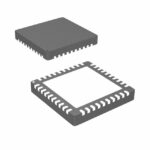 73S8010C-IMR/F
The activity of extra discounts on wholesale prices is in full swing…
Please fill in your contact information and we will send you the latest wholesale price list.





