 ChipApex | Global Electronic Components Supplier
SEARCH
Search Product
Search Post
— IC芯片 | 连接器 | 传感器 | 被动器件 —
Search productSearch post
— IC芯片 | 连接器 | 传感器 | 被动器件 —
Consult the customer manager about the wholesale price.
consultation hotline:86-132-6715-2157
email:[email protected]
Contact the product manager for consultation. One-stop consultation is available.
Do you want a lower wholesale price? Please send us your inquiry and we will reply immediately.
The Analog Devices/Maxim Integrated 73S8014RN is a single smart card interface circuit designed for asynchronous ICC support. It operates with a digital supply voltage (VDD) of 2.7V to 5.5V and an LDO regulator supply (VPC) of 4.75V to 5.5V. The device supports 3V or 5V cards with up to 65mA load current and provides over-current detection up to 130mA. It features an on-chip oscillator supporting external crystals or host clocks up to 27MHz, generating card clock frequencies up to 20MHz. The component includes ISO 7816-3 activation/deactivation sequencing, 6kV ESD protection on card pins, and interfaces via a control bus with three digital inputs and one interrupt output. It is housed in a 20-pin SO package.
Verify the specific ordering suffix against the manufacturer's official documentation to confirm package type and temperature range. Confirm that the source document identifies the original manufacturer as Teridian Semiconductor Corporation, now part of Analog Devices. Ensure compatibility with existing firmware designed for 8024-type devices before implementation.
Select this component when designing systems requiring strict compliance with NDS or EMV 4.0 standards for asynchronous smart cards. It is suitable for applications where a dedicated 5V supply is available for the LDO regulator. Consider the 20-pin SO package constraints and the requirement for external resistors if customizing the VDD fault threshold voltage.
The 73S8014RN is derived from the industry-standard 73S8024RN electrical interface but optimized for lower pin counts and single I/O support. It targets Set-Top Box and A/V Conditional Access markets. The device maintains firmware compatibility with the broader 8024 family while offering reduced external component requirements and improved noise performance through its integrated LDO regulator.
The datasheet explicitly states firmware compatibility with all 8024 ICs. Designers migrating from other 8024-type devices should verify pinout differences, specifically the reduced pin count, and ensure the target application does not require synchronous card protocols unsupported by this model.
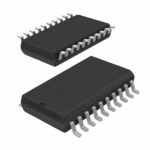 73S8014RN-IL/F
The activity of extra discounts on wholesale prices is in full swing…
Please fill in your contact information and we will send you the latest wholesale price list.






