 ChipApex | Global Electronic Components Supplier
SEARCH
Search Product
Search Post
— IC芯片 | 连接器 | 传感器 | 被动器件 —
Search productSearch post
— IC芯片 | 连接器 | 传感器 | 被动器件 —
Consult the customer manager about the wholesale price.
consultation hotline:86-132-6715-2157
email:[email protected]
Contact the product manager for consultation. One-stop consultation is available.
Do you want a lower wholesale price? Please send us your inquiry and we will reply immediately.
The 73S8014RT-IL/F2 is a single smart card interface circuit derived from the 73S8024RN, optimized for asynchronous card support in Set-Top-Box and A/V Conditional Access applications. It complies with ISO 7816-3 and EMV 4.0 specifications. The device features an internal LDO regulator providing 3V or 5V at up to 65mA, powered by VPC (4.75V to 5.5V). Digital logic operates on VDD (2.7V to 5.5V). It interfaces via digital I/Os including CMDVCC, RSTIN, and 5V/#V, with an interrupt output OFF. Clock generation supports external crystals or host clocks up to 27MHz, yielding card clock frequencies up to 20MHz. It includes true over-current detection up to 130mA and adjustable VDD fault thresholds.
Verify the specific suffix RT-IL/F2 against the manufacturer's current ordering guide to confirm package type and tape/reel configuration. As this component originates from Teridian Semiconductor Corporation, now part of Analog Devices Inc., ensure that the source documentation matches the intended revision level for your design implementation.
Select this component when firmware compatibility with existing 8024 designs is required while reducing pin count and system cost. Ensure the application provides a dedicated 5V supply for the VPC pin to drive the internal LDO regulator. Verify that the host controller can manage the digital control lines and handle the active-low interrupt signal for proper fault monitoring.
This part belongs to the 73S80xxR family of smart card interface ICs originally developed by Teridian Semiconductor Corporation. The 73S8014R variant specifically targets applications requiring only asynchronous smart card support, offering a smaller 20-pin SO package compared to the full-featured 73S8024RN. It maintains electrical compliance with industry standards while optimizing for typical consumer electronics form factors.
Direct replacements include other members of the 73S80xxR family such as the 73S8024RN for enhanced feature sets. Cross-reference with Maxim Integrated/Analog Devices equivalents if sourcing from current distributors, ensuring pinout and firmware register compatibility are maintained.
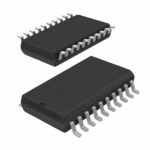 73S8014RT-IL/F2
The activity of extra discounts on wholesale prices is in full swing…
Please fill in your contact information and we will send you the latest wholesale price list.