ChipApex | Global Electronic Components Supplier
SEARCH
Search Product
Search Post
— IC芯片 | 连接器 | 传感器 | 被动器件 —
Search productSearch post
— IC芯片 | 连接器 | 传感器 | 被动器件 —
Consult the customer manager about the wholesale price.
consultation hotline:86-132-6715-2157
email:[email protected]
Contact the product manager for consultation. One-stop consultation is available.
Do you want a lower wholesale price? Please send us your inquiry and we will reply immediately.
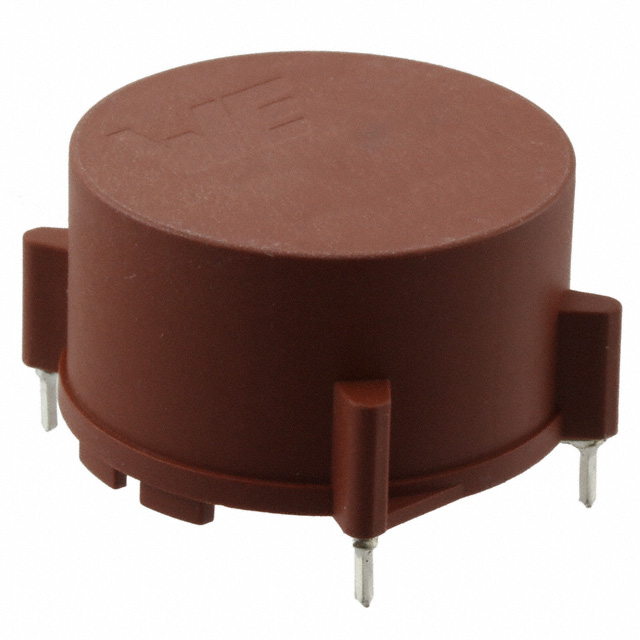
The Würth Elektronik 7446921027 is a WE-HCC series high-current common mode choke designed for signal line filtering. It features a shielded core structure to minimize electromagnetic interference radiation. The component supports a rated current of 300 mA with an inductance value of 50 µH measured at 100 kHz and 0 V DC bias. It exhibits a maximum DC resistance of 1.8 Ω per line and withstands a test voltage of 1500 Vrms between windings. The device operates within a temperature range of -40 °C to +85 °C and utilizes a surface-mount package.
Verify the complete order code against official Würth Elektronik documentation to ensure correct pin configuration and tolerance specifications. Confirm that the requested variant matches the required inductance and current ratings for the specific circuit application. Cross-reference the manufacturing date code and packaging format with supplier confirmation sheets prior to finalizing procurement orders.
Select this component based on the required inductance value and current handling capacity for the target signal line. Ensure the physical dimensions fit within the available PCB area constraints. Verify that the operating temperature range aligns with the environmental conditions of the end product. Consider the DC resistance impact on signal attenuation when evaluating compatibility with the source impedance.
This component belongs to the WE-HCC series of common mode chokes from Würth Elektronik. The series focuses on providing effective noise suppression for high-speed digital interfaces while maintaining signal integrity. These components are engineered for applications requiring compact solutions with robust electromagnetic compatibility performance in space-constrained electronic designs.
Consult official manufacturer substitution lists for verified equivalent part numbers. Do not assume cross-compatibility with generic common mode chokes due to differences in core material characteristics and saturation behavior. Validate any alternative component against the original electrical parameters and mechanical footprint requirements.
 7446921027
The activity of extra discounts on wholesale prices is in full swing…
Please fill in your contact information and we will send you the latest wholesale price list.