 ChipApex | Global Electronic Components Supplier
SEARCH
Search Product
Search Post
— IC芯片 | 连接器 | 传感器 | 被动器件 —
Search productSearch post
— IC芯片 | 连接器 | 传感器 | 被动器件 —
Consult the customer manager about the wholesale price.
consultation hotline:86-132-6715-2157
email:[email protected]
Contact the product manager for consultation. One-stop consultation is available.
Do you want a lower wholesale price? Please send us your inquiry and we will reply immediately.
The 74ABT573APW,118 is an octal D-type transparent latch with 3-State outputs manufactured by NXP USA Inc. It operates within a supply voltage range of 4.5 V to 5.5 V and supports an operating temperature range from -40°C to +85°C. The device features a flow-through pinout in a 20-pin TSSOP package. Propagation delays are specified at 2.8 ns (typical) for data-to-output transitions and 2.5 ns (typical) for enable-to-output transitions at 5V. Output drive capabilities include -32 mA high-level and 64 mA low-level currents.
Verify the specific ordering suffix 'PW' corresponds to the 20-pin Plastic TSSOP Type I package when sourcing. Confirm that the manufacturer designation aligns with NXP USA Inc., as Philips Semiconductors was the original issuer of this specification. Ensure compatibility with the recommended operating conditions regarding supply voltage limits and thermal ranges before integration into final designs.
Select this component when a flow-through pinout is required for direct microprocessor interfacing, distinguishing it from the functionally identical but differently pinned 74ABT373. Consider the ABT series characteristics for applications demanding higher speed and lower power consumption compared to standard TTL or CMOS alternatives. Verify that the 3-State output buffers meet the bus loading requirements of the target system architecture.
This component belongs to the 74ABT logic family, characterized by BiCMOS technology offering high speed and low power. It serves as an octal latch variant within the broader 74-series logic ecosystem. The device is functionally equivalent to the 74ABT373 but utilizes a distinct pinout arrangement optimized for specific layout constraints and processor interface needs.
The 74ABT373 is functionally identical but lacks the flow-through pinout. Other 74ABT series latches may offer different pin configurations or package types. Verify pin compatibility and electrical specifications against current design requirements before substituting.
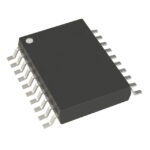 74ABT573APW,118
The activity of extra discounts on wholesale prices is in full swing…
Please fill in your contact information and we will send you the latest wholesale price list.






