 ChipApex | Global Electronic Components Supplier
SEARCH
Search Product
Search Post
— IC芯片 | 连接器 | 传感器 | 被动器件 —
Search productSearch post
— IC芯片 | 连接器 | 传感器 | 被动器件 —
Consult the customer manager about the wholesale price.
consultation hotline:86-132-6715-2157
email:[email protected]
Contact the product manager for consultation. One-stop consultation is available.
Do you want a lower wholesale price? Please send us your inquiry and we will reply immediately.
The STMicroelectronics 74AC299MTR is an advanced high-speed CMOS 8-bit parallel-in/parallel-out (PIPO) shift register featuring 3-state outputs. Fabricated using sub-micron silicon gate and double-layer metal wiring C2MOS technology, it operates within a supply voltage range of 2V to 6V. The device supports four modes: hold, shift left, shift right, and load data, controlled by function select inputs S0 and S1. It includes an asynchronous master reset input and provides serial outputs QA' and QH' for cascading. Key electrical characteristics include a maximum clock frequency of 240MHz at 5V, symmetrical output impedance with 24mA drive capability, and low quiescent current.
Verify the exact ordering code suffix against the manufacturer's official documentation to confirm package type and tape/reel specifications. Ensure compatibility with your system's voltage levels and logic families. Confirm availability status as product lifecycles may change. Cross-reference pinouts and mechanical dimensions with the latest datasheet before integration.
Select this component when high-speed operation up to 240MHz is required alongside low power consumption. It is suitable for designs needing flexible data shifting modes and bus isolation via 3-state outputs. Consider the 2V to 6V operating range for versatility across different logic environments. Ensure adequate heat dissipation if driving heavy loads near the 24mA limit.
The 74AC299 belongs to the AC series of advanced CMOS logic devices from STMicroelectronics. It is functionally compatible with the standard 74299 series but offers improved speed and lower power dissipation. The MTR suffix typically indicates a tape and reel packaging format, suitable for automated surface-mount assembly processes.
Check for direct replacements like the 74ACT299 or other 8-bit universal shift registers with 3-state outputs from various manufacturers. Verify pinout compatibility and electrical parameter alignment, particularly propagation delays and supply voltage ranges, before substituting.
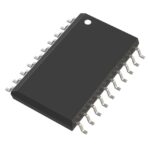 74AC299MTR
The activity of extra discounts on wholesale prices is in full swing…
Please fill in your contact information and we will send you the latest wholesale price list.





