 ChipApex | Global Electronic Components Supplier
SEARCH
Search Product
Search Post
— IC芯片 | 连接器 | 传感器 | 被动器件 —
Search productSearch post
— IC芯片 | 连接器 | 传感器 | 被动器件 —
Consult the customer manager about the wholesale price.
consultation hotline:86-132-6715-2157
email:[email protected]
Contact the product manager for consultation. One-stop consultation is available.
Do you want a lower wholesale price? Please send us your inquiry and we will reply immediately.
The onsemi 74ACT520SC is an octal bus transceiver belonging to the 74ACT logic family, designed for high-speed data transfer applications. It features eight bidirectional data paths with three-state outputs, allowing multiple devices to share a common bus without electrical conflict. The device operates within a supply voltage range of 4.5 V to 5.5 V and supports TTL-compatible input levels while providing CMOS output characteristics. Packaged in a standard SOIC-20 surface-mount format, it ensures reliable performance across industrial temperature ranges.
Verify the specific suffix designation against the manufacturer's official datasheet to confirm package type and tape/reel specifications. Ensure the component meets RoHS compliance requirements for your target market. Cross-reference the ordering code with authorized distributors to guarantee authenticity and traceability. Confirm that the humidity sensitivity level aligns with your facility's storage and reflow soldering capabilities.
Select this component when designing systems requiring wide data width transfers over shared buses. The ACT series offers superior speed compared to standard HC logic while maintaining compatibility with TTL inputs. Consider the SOIC-20 package dimensions for PCB layout constraints. Evaluate the power supply stability requirements to maintain operation within the specified 4.5 V to 5.5 V window for optimal switching performance.
This part belongs to the widely adopted 74ACT family of integrated circuits, which bridges the performance gap between older TTL technologies and modern CMOS solutions. The 74ACT520 specifically addresses the need for high-density data routing in complex digital architectures. Its standardized pinout allows for drop-in replacement in many existing designs originally built around similar octal transceiver functions.
Check for equivalent parts from other manufacturers such as NXP or Texas Instruments that match the 74ACT520 specification. Verify pin-to-pin compatibility before substitution. Ensure the alternative component shares the same SOIC-20 footprint and electrical characteristics to avoid redesign efforts.
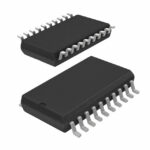 74ACT520SC
The activity of extra discounts on wholesale prices is in full swing…
Please fill in your contact information and we will send you the latest wholesale price list.





