 ChipApex | Global Electronic Components Supplier

SEARCH
Search Product
Search Post
— IC芯片 | 连接器 | 传感器 | 被动器件 —
Search productSearch post
— IC芯片 | 连接器 | 传感器 | 被动器件 —
Consult the customer manager about the wholesale price.
consultation hotline:86-132-6715-2157
email:[email protected]
Contact the product manager for consultation. One-stop consultation is available.
Do you want a lower wholesale price? Please send us your inquiry and we will reply immediately.
74AHCT241PW,118 is listed in the Buffers, Drivers, Receivers, Transceivers range at ChipApex. The manufacturer field lists NXP USA Inc.. Its product description is IC BUF NON-INVERT 5.5V 20TSSOP. Review the specifications below when checking this part for your BOM.
The 74AHCT241PW,118 is an octal buffer and line driver featuring 3-state outputs manufactured by Nexperia. It operates within a supply voltage range of 4.5 V to 5.5 V and supports TTL input levels. The device provides balanced propagation delays with Schmitt-trigger action on all inputs, which are over-voltage tolerant. It includes ESD protection exceeding 2000 V (HBM) and 1000 V (CDM). The component is available in a TSSOP20 package and functions as two independent 4-bit buffers or one 8-bit buffer.
Verify the manufacturer designation as Nexperia B.V., noting the transition from NXP Standard Products. Confirm the specific ordering suffix
Select this part when TTL-compatible inputs are required alongside CMOS performance characteristics. Ensure the application environment stays within the specified temperature range of -40 °C to +125 °C. Verify that the TSSOP20 package dimensions fit the PCB layout constraints and that the power dissipation limits are respected under maximum load conditions.
This component belongs to the 74AHC/AHCT logic family, designed for high-speed digital applications. The AHCT variant specifically bridges TTL and CMOS logic families, enabling direct interfacing between legacy TTL devices and modern CMOS systems without additional level shifting circuitry.
74AHCT241D
The inputs are over-voltage tolerant, allowing them to accept voltages higher than VCC. This feature enables the device to function effectively as a translator between different voltage domains.
The device has two output enables: 1OE (active LOW) and 2OE (active HIGH). Each enable controls four of the 3-state outputs independently.
Explore related parts through Logic, Integrated Circuits (ICs), all product categories, ChipApex homepage.
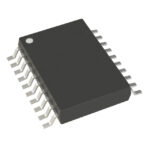 74AHCT241PW,118

The activity of extra discounts on wholesale prices is in full swing…
Please fill in your contact information and we will send you the latest wholesale price list.





