 ChipApex | Global Electronic Components Supplier
SEARCH
Search Product
Search Post
— IC芯片 | 连接器 | 传感器 | 被动器件 —
Search productSearch post
— IC芯片 | 连接器 | 传感器 | 被动器件 —
Consult the customer manager about the wholesale price.
consultation hotline:86-132-6715-2157
email:[email protected]
Contact the product manager for consultation. One-stop consultation is available.
Do you want a lower wholesale price? Please send us your inquiry and we will reply immediately.
The Nexperia 74ALVCH16601 is an 18-bit universal bus transceiver featuring 3-state outputs and bus hold inputs. It supports a wide supply voltage range from 1.65 V to 3.6 V, with recommended operating conditions of 2.3 V to 2.7 V for maximum speed at 30 pF load, or 3.0 V to 3.6 V at 50 pF load. The device operates within an ambient temperature range of -40 °C to +85 °C. It utilizes the MULTIBYTE flow-through standard pin-out architecture and includes low inductance multiple VCC and GND pins to minimize noise and ground bounce.
Verify the specific ordering suffix '11' against official Nexperia documentation to confirm tape-and-reel packaging specifications. Ensure the selected package variant matches the required PCB footprint and thermal management needs. Confirm compliance with relevant environmental directives such as RoHS and REACH before finalizing procurement orders.
Select this component for designs requiring bidirectional data transfer with latching capabilities across 18 bits. The ALVCH series offers high-speed performance suitable for modern digital systems. Consider the available package options and ensure the supply voltage aligns with the system's operational requirements for optimal propagation delay characteristics.
This device belongs to the 74ALVCH family of high-speed CMOS logic products manufactured by Nexperia. The family is characterized by low power dissipation and compatibility with various logic families. The 74ALVCH16601 specifically addresses the need for versatile bus interfacing in complex digital circuits requiring reliable data storage and transmission.
Consult official Nexperia substitution guides for compatible alternatives. Verify functional equivalence regarding pinout, voltage ranges, and electrical characteristics when considering cross-brand replacements.
The IOFF circuitry disables the outputs when the device is powered down, preventing potentially damaging backflow current through the device.
Bus hold inputs maintain the last known logic state of the data lines, ensuring stable signals when the bus is not actively driving data.
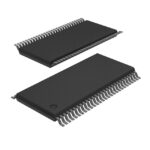 74ALVCH16601DGG,11
The activity of extra discounts on wholesale prices is in full swing…
Please fill in your contact information and we will send you the latest wholesale price list.







