 ChipApex | Global Electronic Components Supplier

SEARCH
Search Product
Search Post
— IC芯片 | 连接器 | 传感器 | 被动器件 —
Search productSearch post
— IC芯片 | 连接器 | 传感器 | 被动器件 —
Consult the customer manager about the wholesale price.
consultation hotline:86-132-6715-2157
email:[email protected]
Contact the product manager for consultation. One-stop consultation is available.
Do you want a lower wholesale price? Please send us your inquiry and we will reply immediately.
The Nexperia 74ALVCH16843DGGY is an 18-bit bus-interface D-type latch housed in a 56-lead TSSOP (SOT364-1) package. It comprises two independent 9-bit latches with separate data inputs and three-state outputs. The device operates within a supply voltage range of 2.3 V to 3.6 V, featuring active bus hold circuitry on all data inputs to maintain valid logic levels without external resistors. Propagation delays from data input to output range from 1.0 ns to 4.3 ns depending on voltage and load conditions.
Verify the specific ordering suffix 'Y' against current Nexperia documentation to confirm packaging details such as reel size or tape specifications. Confirm that the TSSOP56 package variant matches your PCB footprint requirements. Ensure compliance with RoHS directives and check for any recent product change notices regarding marking or material composition updates.
Select this component when designing systems requiring 18-bit parallel data latching with high-speed performance. The ALVCH series offers low power consumption and wide supply voltage compatibility. Verify that the operating temperature range of -40 °C to +85 °C meets your environmental constraints and that the 56-lead TSSOP package fits your board space limitations.
This part belongs to the Nexperia 74ALVCH family of advanced low-voltage CMOS logic devices. The 74ALVCH16843 specifically addresses applications needing high-density data storage with bus interface capabilities. It utilizes a flow-through pin-out architecture to minimize noise and ground bounce through multiple VCC and GND pins.
The 74ALVCH16843DGG,11 is listed as a discontinued substitute option by distributors, though the primary datasheet does not explicitly define functional equivalence for cross-referencing. Verify pinout and electrical characteristics before substitution.
The active bus hold circuitry holds unused or floating data inputs at a valid logic level, which eliminates the need for external pull-up or pull-down resistors.
When nOE is HIGH, the outputs enter a high-impedance OFF state. However, the operation of the nOE input does not affect the internal state of the flip-flops.
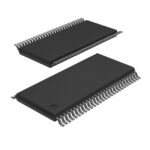 74ALVCH16843DGGY

The activity of extra discounts on wholesale prices is in full swing…
Please fill in your contact information and we will send you the latest wholesale price list.





