 ChipApex | Global Electronic Components Supplier
SEARCH
Search Product
Search Post
— IC芯片 | 连接器 | 传感器 | 被动器件 —
Search productSearch post
— IC芯片 | 连接器 | 传感器 | 被动器件 —
Consult the customer manager about the wholesale price.
consultation hotline:86-132-6715-2157
email:[email protected]
Contact the product manager for consultation. One-stop consultation is available.
Do you want a lower wholesale price? Please send us your inquiry and we will reply immediately.
The Nexperia 74AVC4T245GU-Q100Z is a 4-bit dual supply translating transceiver with configurable voltage translation and 3-state outputs. It supports bidirectional level translation between VCC(A) and VCC(B), both ranging from 0.8 V to 3.6 V. The device operates within an ambient temperature range of -40 °C to +125 °C. Maximum data rates vary by voltage configuration, reaching up to 380 Mbit/s for translations ≥ 1.8 V to 3.3 V. It features IOFF circuitry for partial power-down applications and complies with AEC-Q100 Grade 1 standards.
Verify the specific ordering suffix matches the required package variant, as the GU designation corresponds to the XQFN16 package. Confirm that the Q100 suffix indicates automotive-grade qualification aligned with project requirements. Ensure the procurement documentation references the correct Rev 6 datasheet to validate operating conditions and electrical characteristics against design specifications.
Select this component when designing systems requiring bidirectional translation between two independent low-voltage domains without power supply sequencing constraints. The XQFN16 package offers a compact footprint suitable for space-constrained PCB layouts. Consider the maximum data rate limitations associated with lower voltage differentials when selecting for high-speed interfaces. Verify thermal dissipation capabilities relative to the specific application load.
This part belongs to the 74AVC4T245-Q100 family of 4-bit dual supply translating transceivers. It shares functional similarities with other variants like the 74AVC4T245D-Q100J and 74AVC4T245PW-Q100J, differing primarily in package type. The family is designed for applications needing reliable signal integrity across varying voltage levels in automotive and industrial environments.
Direct replacements include 74AVC4T245D-Q100J (SO16 package) and 74AVC4T245PW-Q100J (TSSOP16 package). These alternatives maintain identical electrical performance and automotive qualification but require compatible footprints on the printed circuit board.
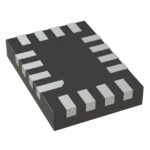 74AVC4T245GU-Q100Z
The activity of extra discounts on wholesale prices is in full swing…
Please fill in your contact information and we will send you the latest wholesale price list.





