 ChipApex | Global Electronic Components Supplier
SEARCH
Search Product
Search Post
— IC芯片 | 连接器 | 传感器 | 被动器件 —
Search productSearch post
— IC芯片 | 连接器 | 传感器 | 被动器件 —
Consult the customer manager about the wholesale price.
consultation hotline:86-132-6715-2157
email:[email protected]
Contact the product manager for consultation. One-stop consultation is available.
Do you want a lower wholesale price? Please send us your inquiry and we will reply immediately.
The Nexperia 74AVC4T774BQ-Q100X is a 4-bit dual supply translating transceiver with 3-state outputs, qualified to AEC-Q100 Grade 1. It operates within a supply voltage range of 0.8 V to 3.6 V on both ports (VCCA and VCCB). The device supports bidirectional level translation between low-voltage nodes including 0.8 V, 1.2 V, 1.5 V, 1.8 V, 2.5 V, and 3.3 V. Maximum data rates reach 380 Mbit/s for translations between 1.8 V and 3.3 V. It features individual direction control inputs (DIRn) and an output enable input (OE), housed in a DHVQFN16 package.
Verify the specific suffix Q100X corresponds to the required automotive grade and packaging configuration. Confirm that the DHVQFN16 package variant matches your PCB footprint requirements. Ensure compatibility with AEC-Q100 Grade 1 reliability standards for your target application environment. Check datasheet specifications for thermal dissipation limits under your expected operating conditions.
Select this component when designing automotive circuits requiring bidirectional translation between varying low-voltage logic levels. The independent DIRn pins allow precise control over data flow direction for each bit. Consider the IOFF feature if the design requires safe operation during partial power-down states. Verify that the 380 Mbit/s maximum data rate meets the speed requirements of your specific interface protocol.
This part belongs to the 74AVC4T774-Q100 family of translating transceivers from Nexperia. It is specifically designed for automotive applications, adhering to strict reliability standards. The BQ suffix indicates the DHVQFN16 package type, while the X suffix typically denotes reel packaging. It serves as a bridge between different voltage domains in complex automotive electronic architectures.
The 74AVC4T774GU-Q100 is a confirmed alternative within the same family, utilizing an XQFN16 package instead of DHVQFN16. Designers must verify pinout compatibility and thermal performance differences between the two package types before substitution.
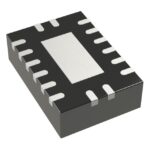 74AVC4T774BQ-Q100X
The activity of extra discounts on wholesale prices is in full swing…
Please fill in your contact information and we will send you the latest wholesale price list.







