 ChipApex | Global Electronic Components Supplier
SEARCH
Search Product
Search Post
— IC芯片 | 连接器 | 传感器 | 被动器件 —
Search productSearch post
— IC芯片 | 连接器 | 传感器 | 被动器件 —
Consult the customer manager about the wholesale price.
consultation hotline:86-132-6715-2157
email:[email protected]
Contact the product manager for consultation. One-stop consultation is available.
Do you want a lower wholesale price? Please send us your inquiry and we will reply immediately.
The National Semiconductor 74F182LC is a high-speed look-ahead carry generator belonging to the F/FA logic family. Designed for integration with arithmetic logic units, it accelerates carry signal propagation by generating group propagate and group generate signals in parallel. This component operates at a rated supply voltage of 5V and supports a wide operating temperature range from -40°C to 85°C. It utilizes a plastic DIP package with through-hole terminals, facilitating its use in legacy high-speed digital systems requiring fast arithmetic processing capabilities.
Verify the specific manufacturer source, as National Semiconductor assets are now managed by Texas Instruments. Confirm the package type matches your PCB footprint requirements. Check current product status, as older F-series components may be discontinued or subject to last-time-buy notices. Ensure compatibility with your system's power supply noise margins and thermal management strategy given the higher current draw typical of this logic family.
Select this component when system performance requires minimizing carry chain latency in arithmetic operations. Consider the higher power consumption compared to modern low-voltage families like LVC or ALVT. Verify that the 5V operating voltage aligns with the rest of the system logic levels. Evaluate if the through-hole DIP package is necessary or if surface-mount alternatives from newer series are available for the design.
This part belongs to the 74F series, known for high speed but higher power consumption. It complements other F-series components such as the 74F181 ALU. The 'LC' suffix typically denotes a specific package variant within the National Semiconductor lineup. As a dedicated carry generator, it serves as a critical building block for constructing multi-bit adders and subtractors without serial carry delays.
It acts as a look-ahead carry generator to speed up carry signal generation in arithmetic logic units.
No, it is designed for a 5V supply voltage and draws higher current than modern low-voltage logic families.
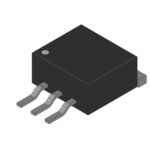 74F182LC
The activity of extra discounts on wholesale prices is in full swing…
Please fill in your contact information and we will send you the latest wholesale price list.





